NUSANTARA: New capital or white elephant?
This project is an offshoot from my book New Capital: Building Cities from Scratch. After my first visit to Nusantara in 2022, I returned in 2025 to follow up the construction progress. More trips are coming up.
In 2019, then Indonesian President Widodo announced the relocation of the national capital from Jakarta—a megacity plagued by overpopulation and chronic flooding—to a newly planned city on the island of Borneo.
Jakarta is often described as a textbook urban jungle: a dense, fast-paced and chaotic megacity. The site where its successor, Nusantara, is now being built lies at the edge of one of the world's most precious tropical rainforests. Indonesia's capital is thus making a remarkable journey: from the metaphorical jungle of the megacity to the literal jungle of Borneo.
Nusantara is envisioned to house 1.9 million people by 2045. The first phase of construction—the government district—was completed in 2024. According to official sources, Nusantara will become a smart “forest city”. Seventy-five per cent of its urban area is intended to remain green, with the city designed to mimic and integrate with the surrounding landscape.
But behind this ambitious vision lies a far more contested reality. Critics warn of its potential impact on indigenous communities, the environment and biodiversity. Kalimantan is home to some of the world's oldest rainforests and provides habitat for endangered species including the orangutan and the sun bear.
The future of the city itself remains uncertain. Since President Prabowo Subianto took office in October 2024, government investment has been scaled back and the new capital appears to have become less of a political priority. Some observers now openly question whether construction will continue at all, raising the prospect that Nusantara could ultimately become a white elephant.
Nusantara thus becomes a site where competing visions of the future collide: ambitious economic development and biodiversity conservation, political power and ecological limits, the dream of a utopian “forest city” and the reality of building a capital in—and against—the jungle.
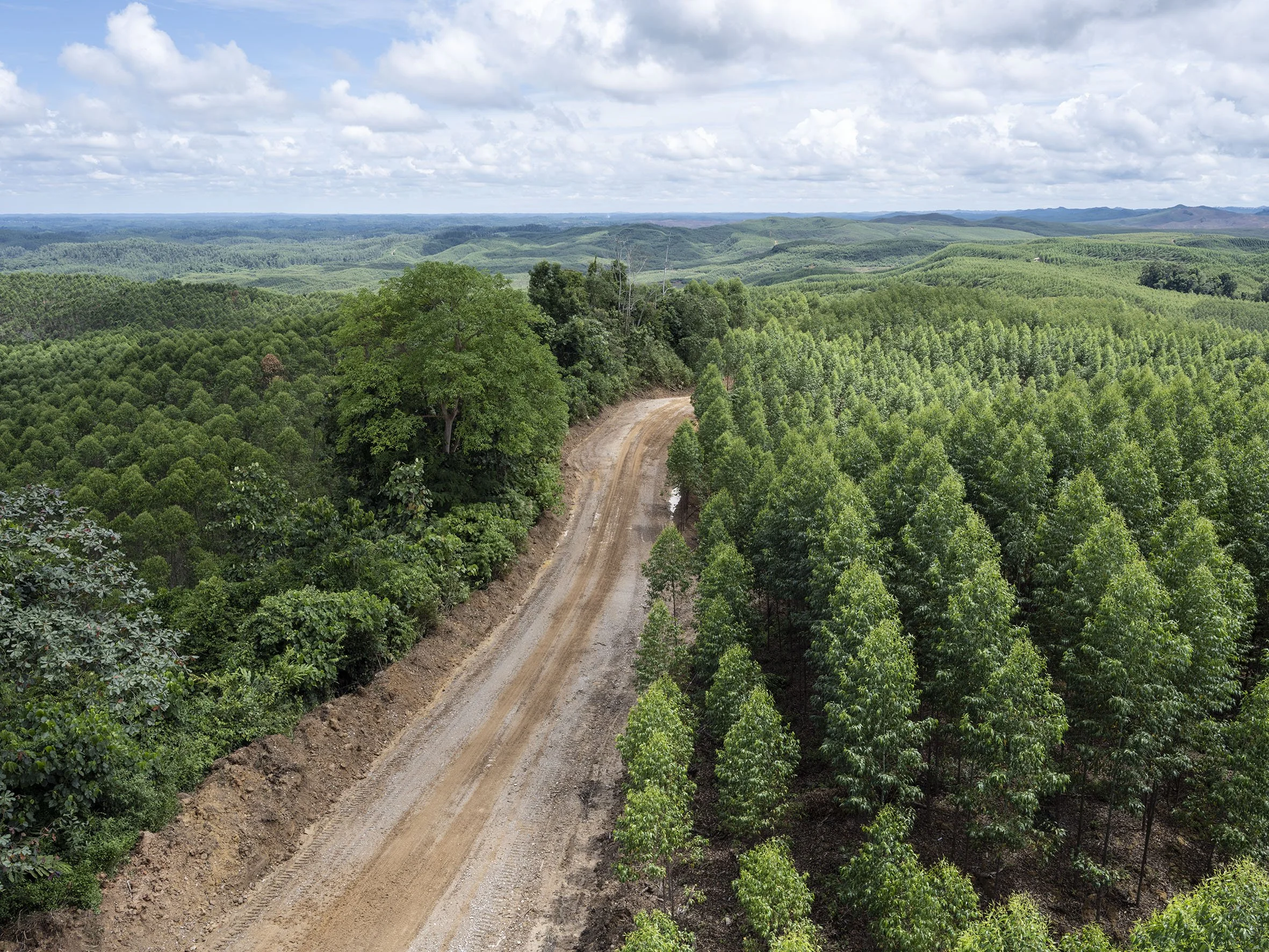
Eucalyptus plantation seen from Sudarmono observation tower near Sepaku, the core area of the future capital. Most of the land for the new capital is owned by PT ITCI Hutani Manunggal (IHM), a private company that supplies raw materials for the paper industry. August 31, 2022.
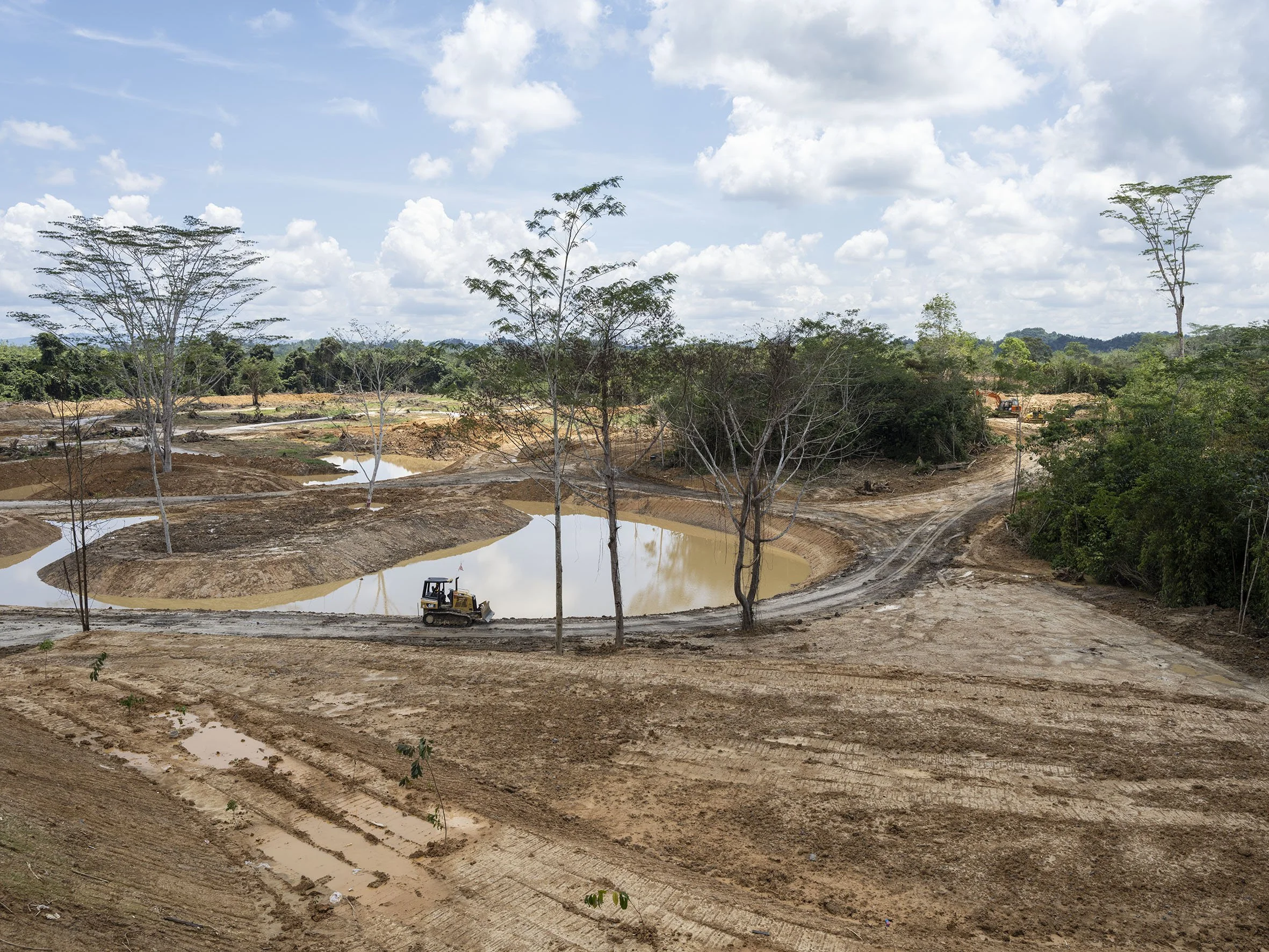
The construction site of the Sepaku Semoi Dam, which will provide water to the new capital. August 31, 2022.
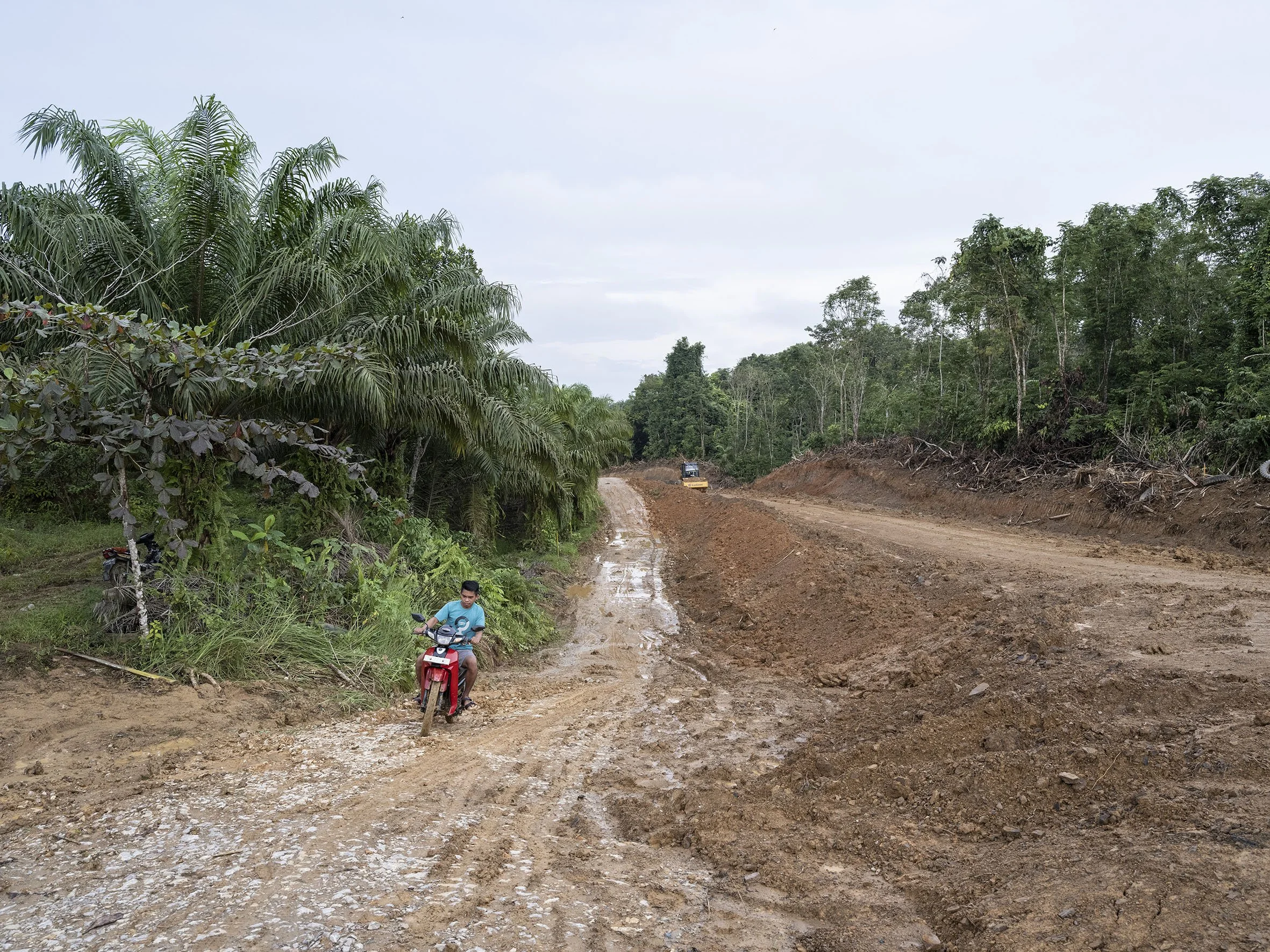
New road, August 30, 2022
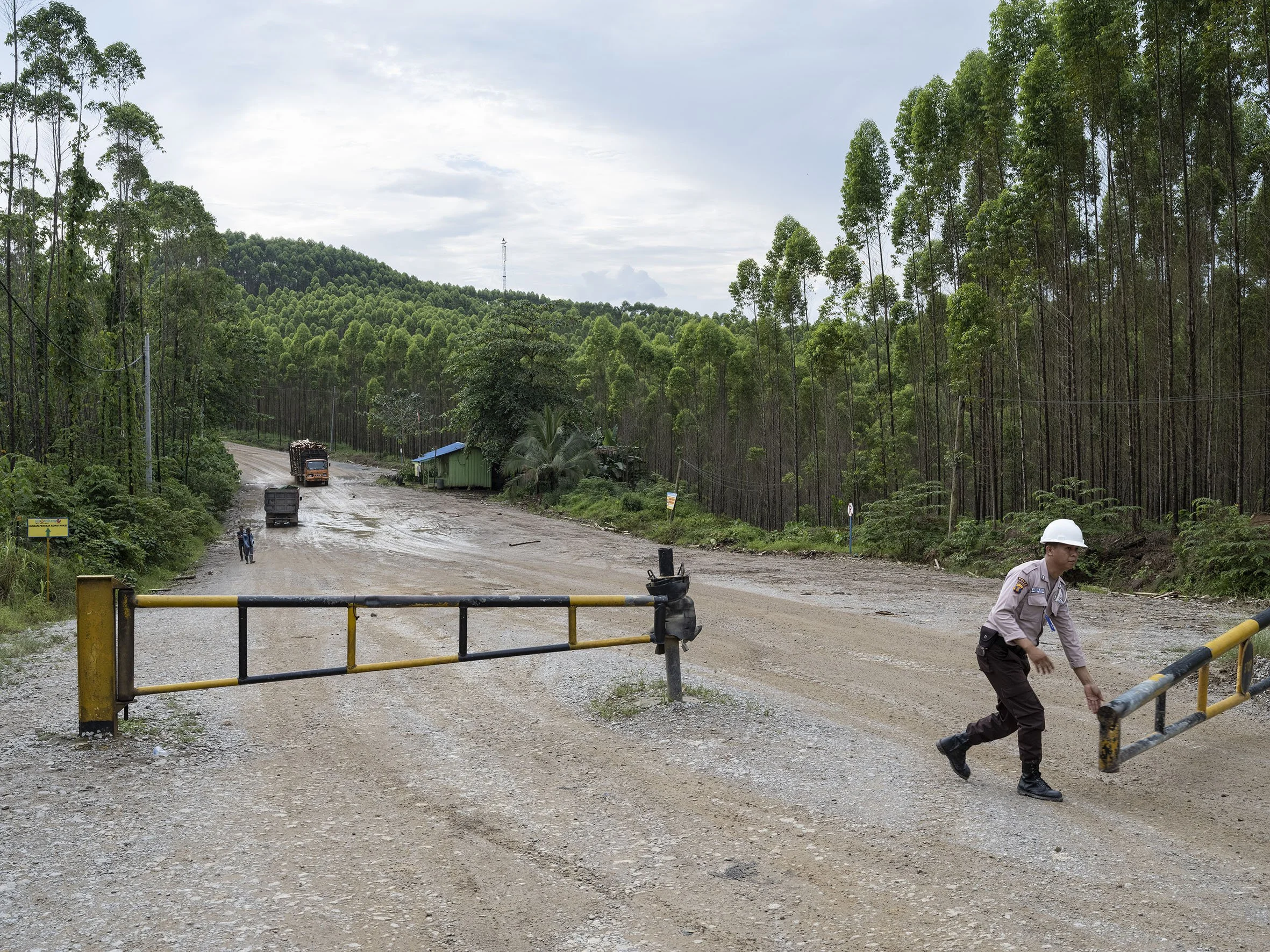
Checkpoint on the road to Titik Nol, August 30, 2022
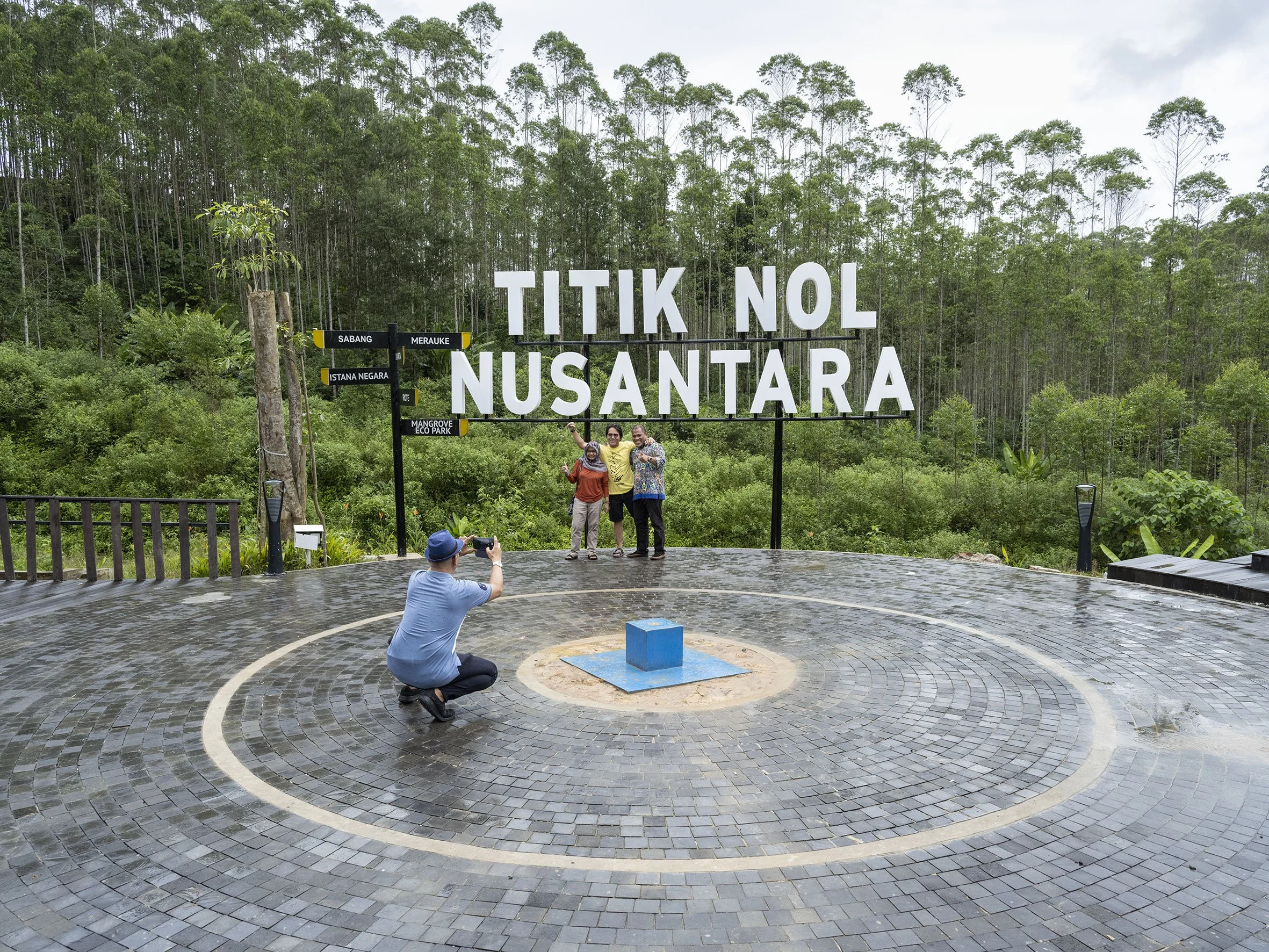
A blue survey column at Titik Nol (Ground Zero) marks the geographic center of Nusantara. August 31, 2022.
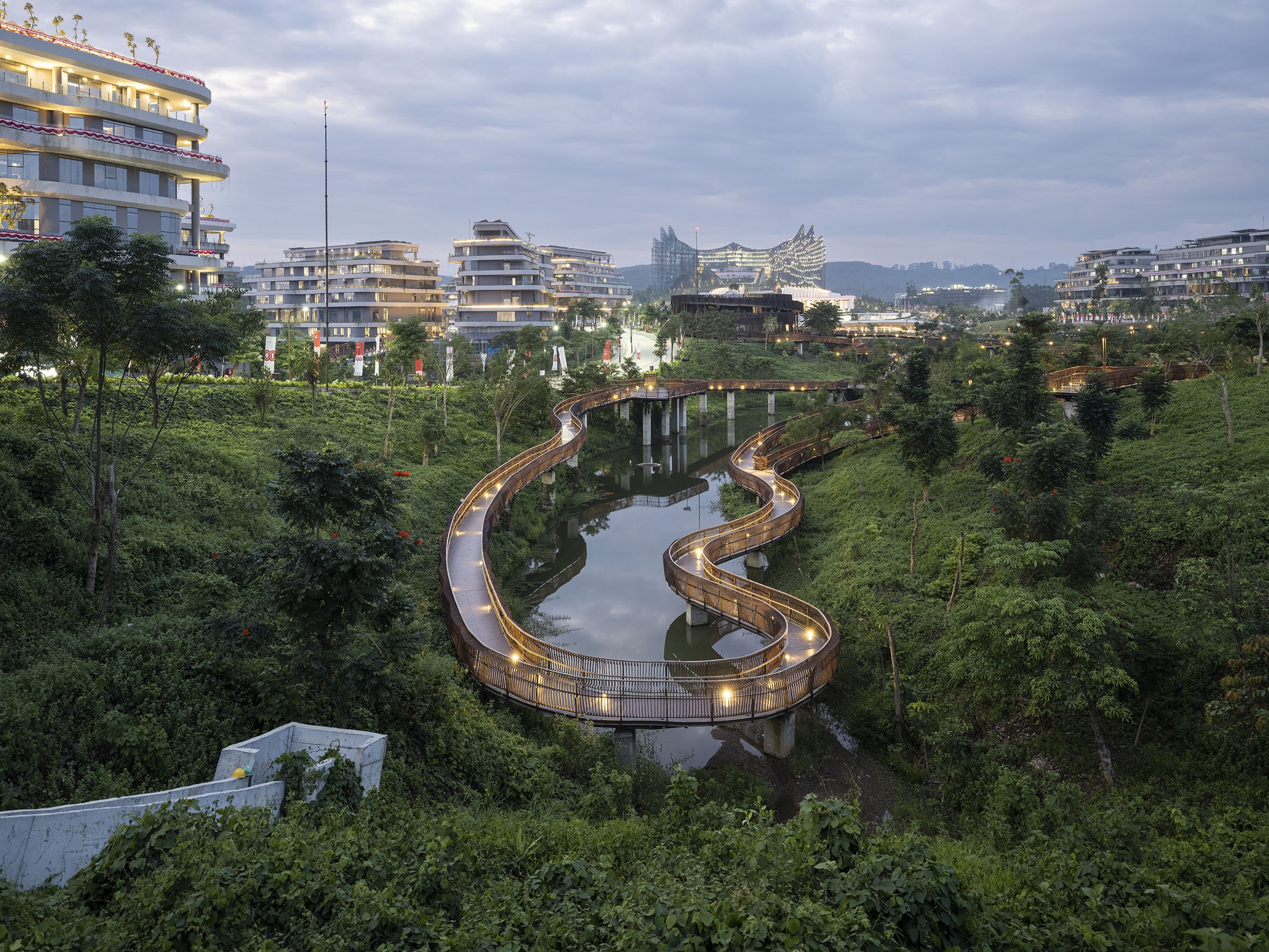
View over the government core area (KIPP) of Nusantara. August 24, 2025
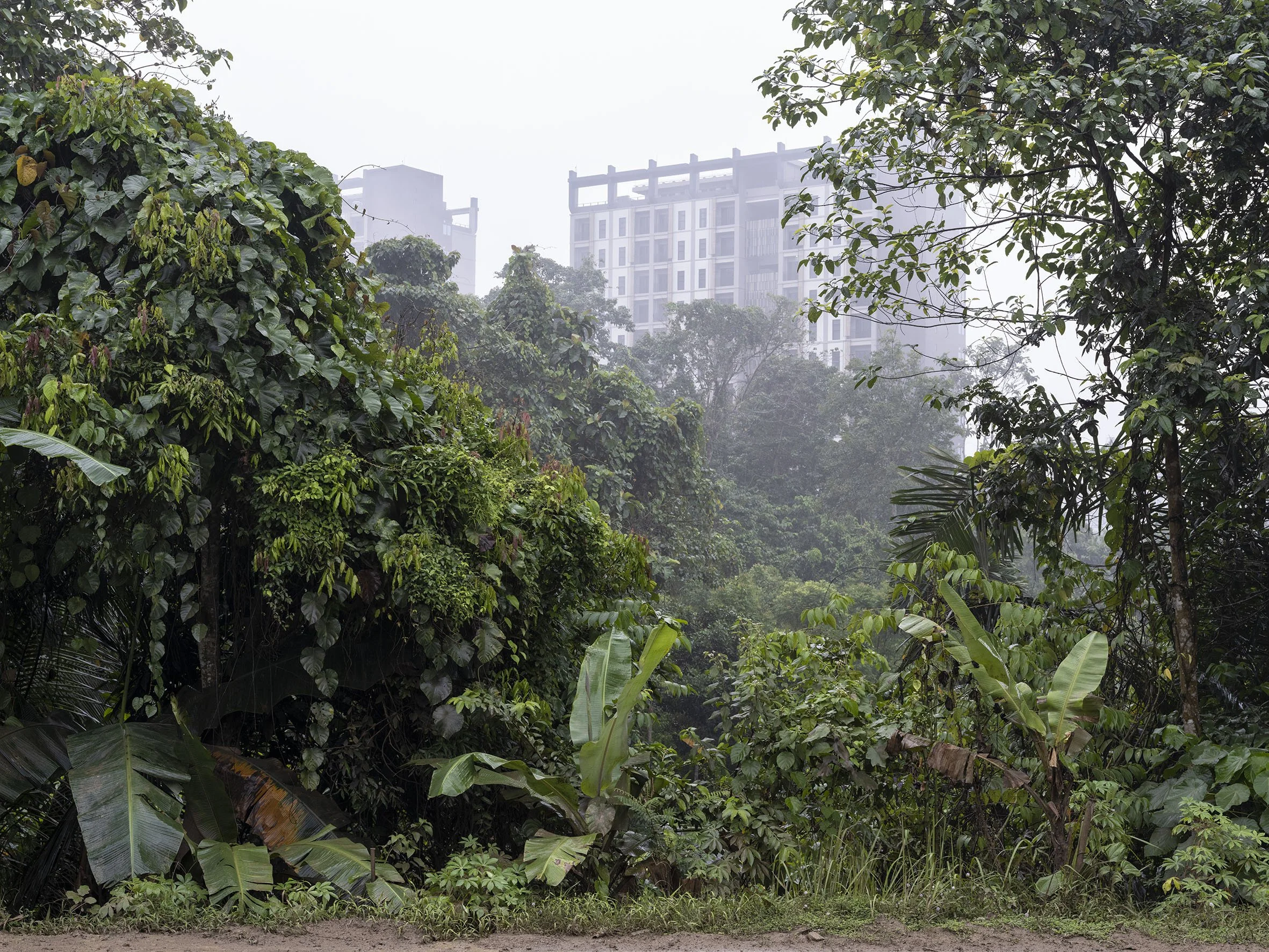
Newly built residential blocks for police and military personel. August 24, 2025
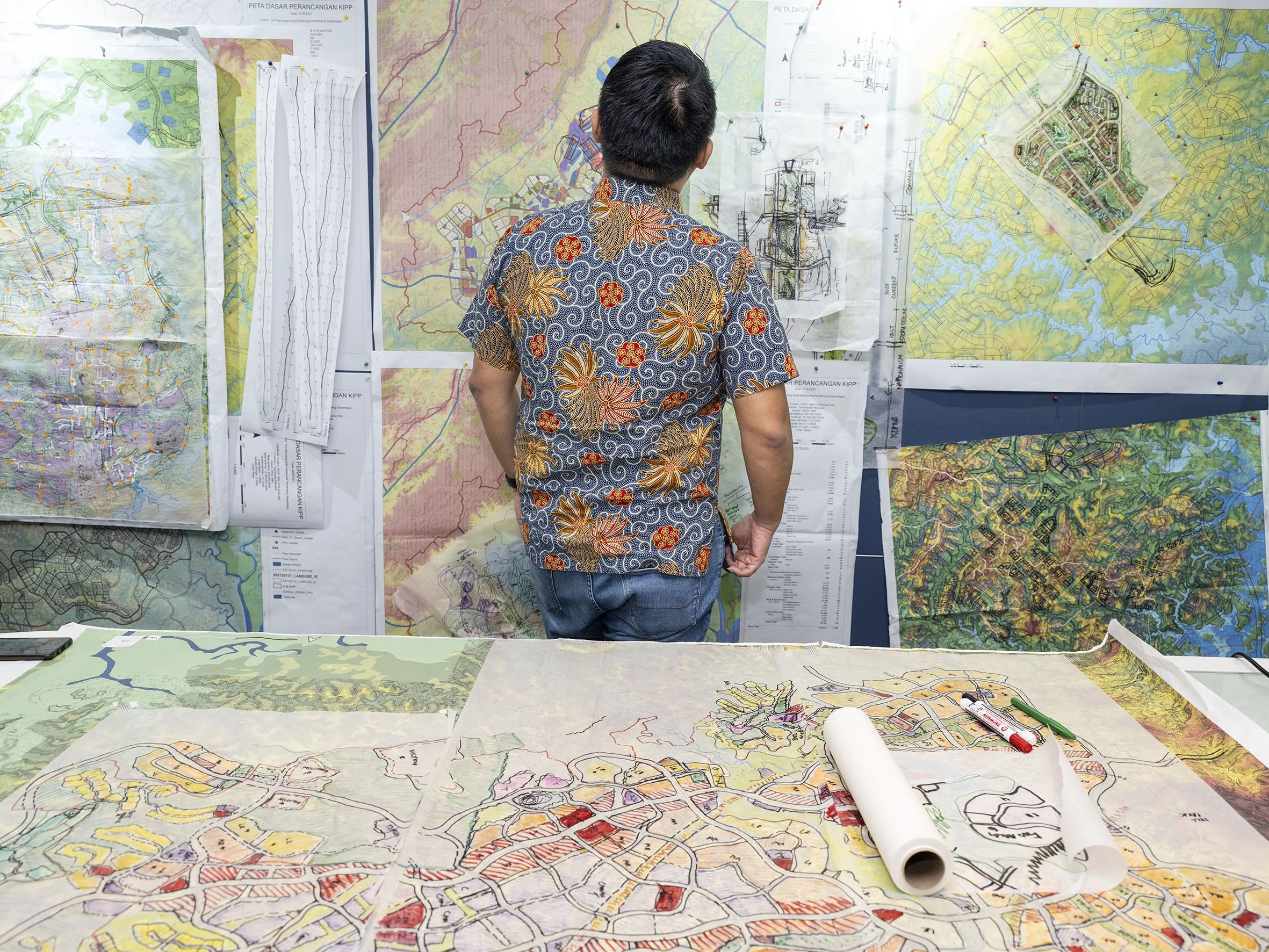
Architect Sibarani Sofian, head of URBAN+ who won the design competition for the new Indonesian capital. Jakarta, September 9, 2022.
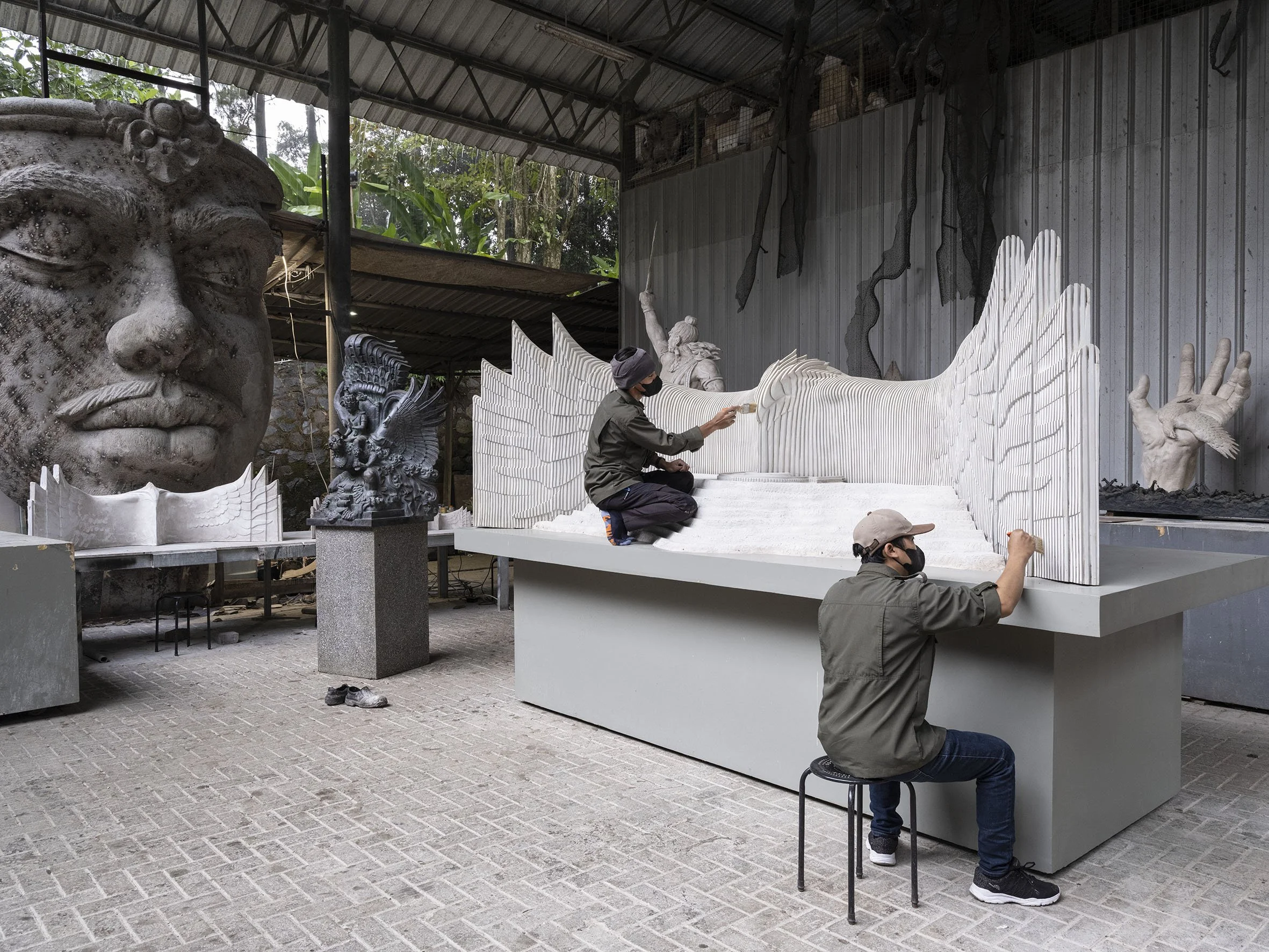
Scale model of the Presidential Palace, designed by Indonesian artist Nyoman Nuarta, at NuArt Sculpture Park in Bandung. September 12, 2022.
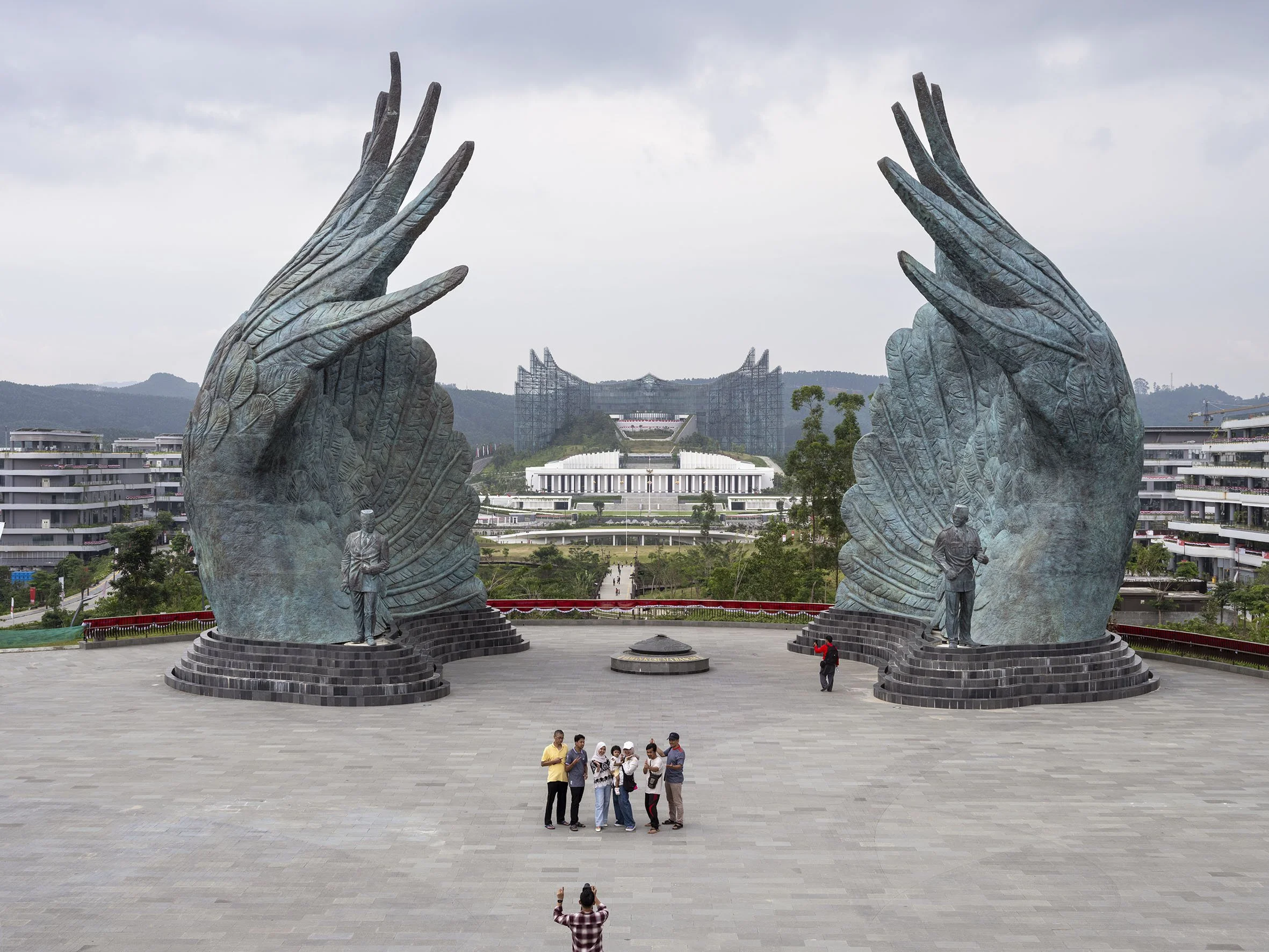
View over Nusantara Protective Wings monument and the Presidential Palace, both designed by Indonesian artist Nyoman Nuarta. August 23, 2025
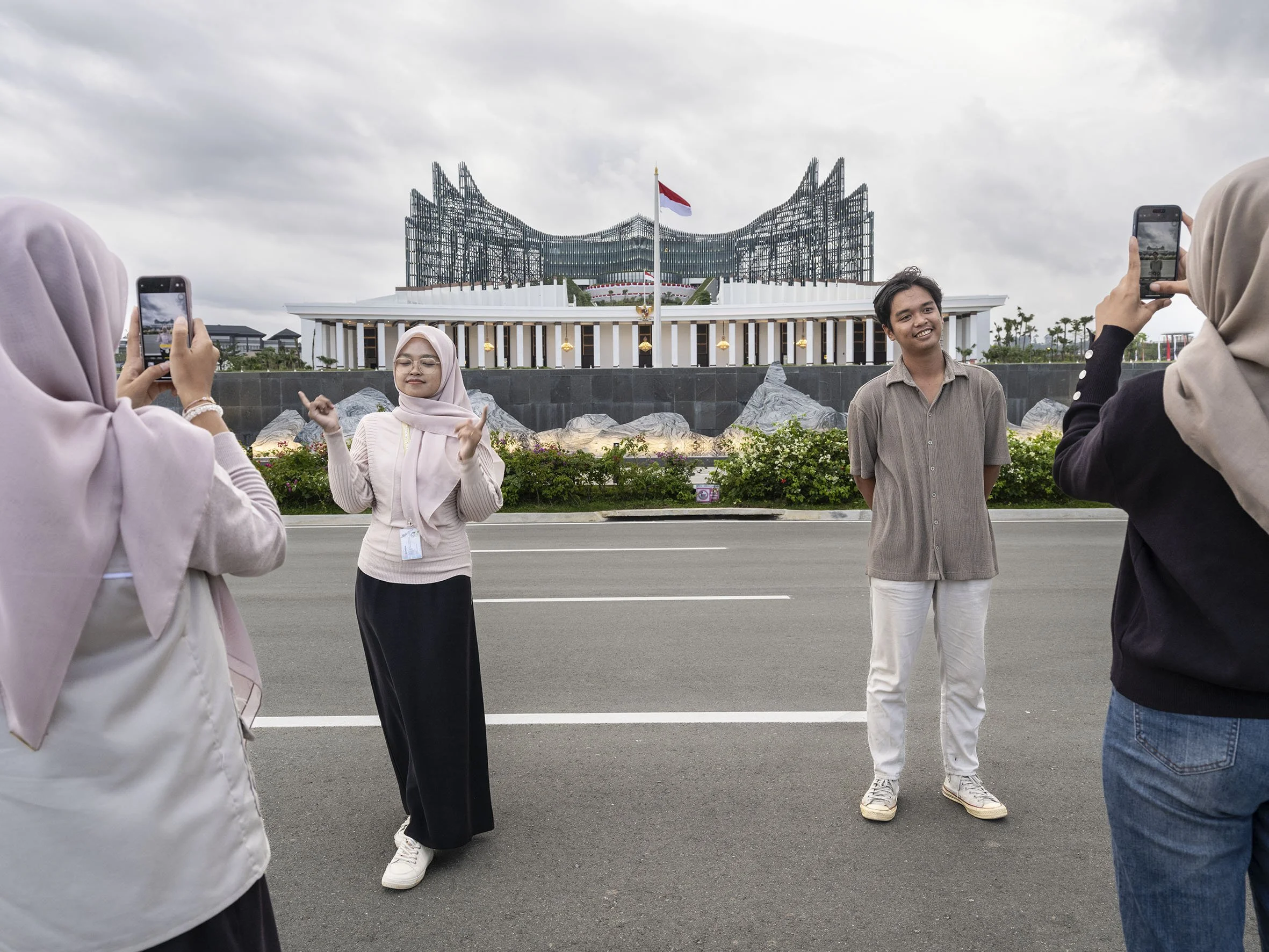
Daytrippers posing in front of the Presidential Palace in Nusantara. August 16, 2025
New residential blocks for civil servants in the government district of Nusantara. August 25, 2025
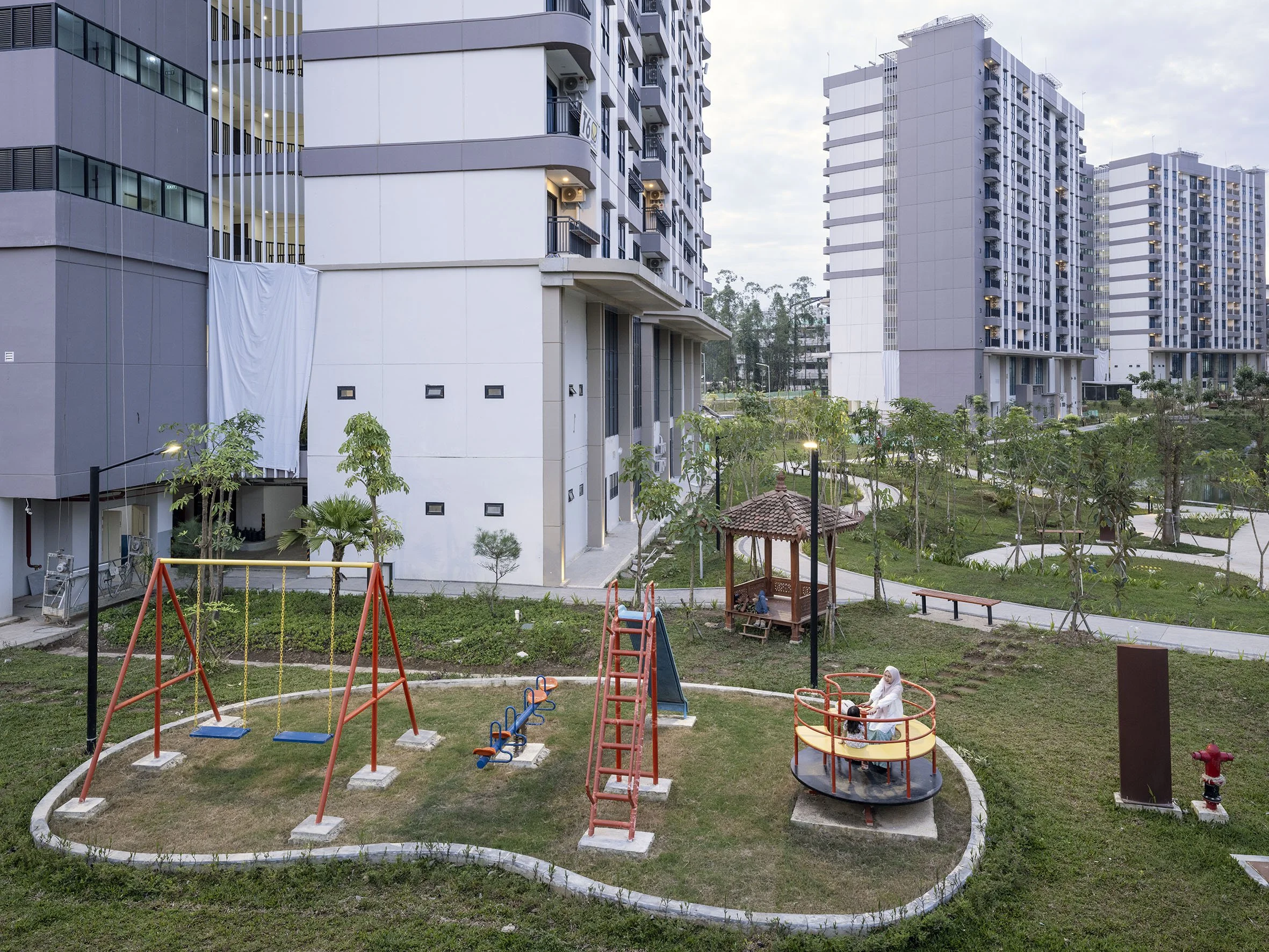
New residential blocks for civil servants in the government district of Nusantara. August 25, 2025
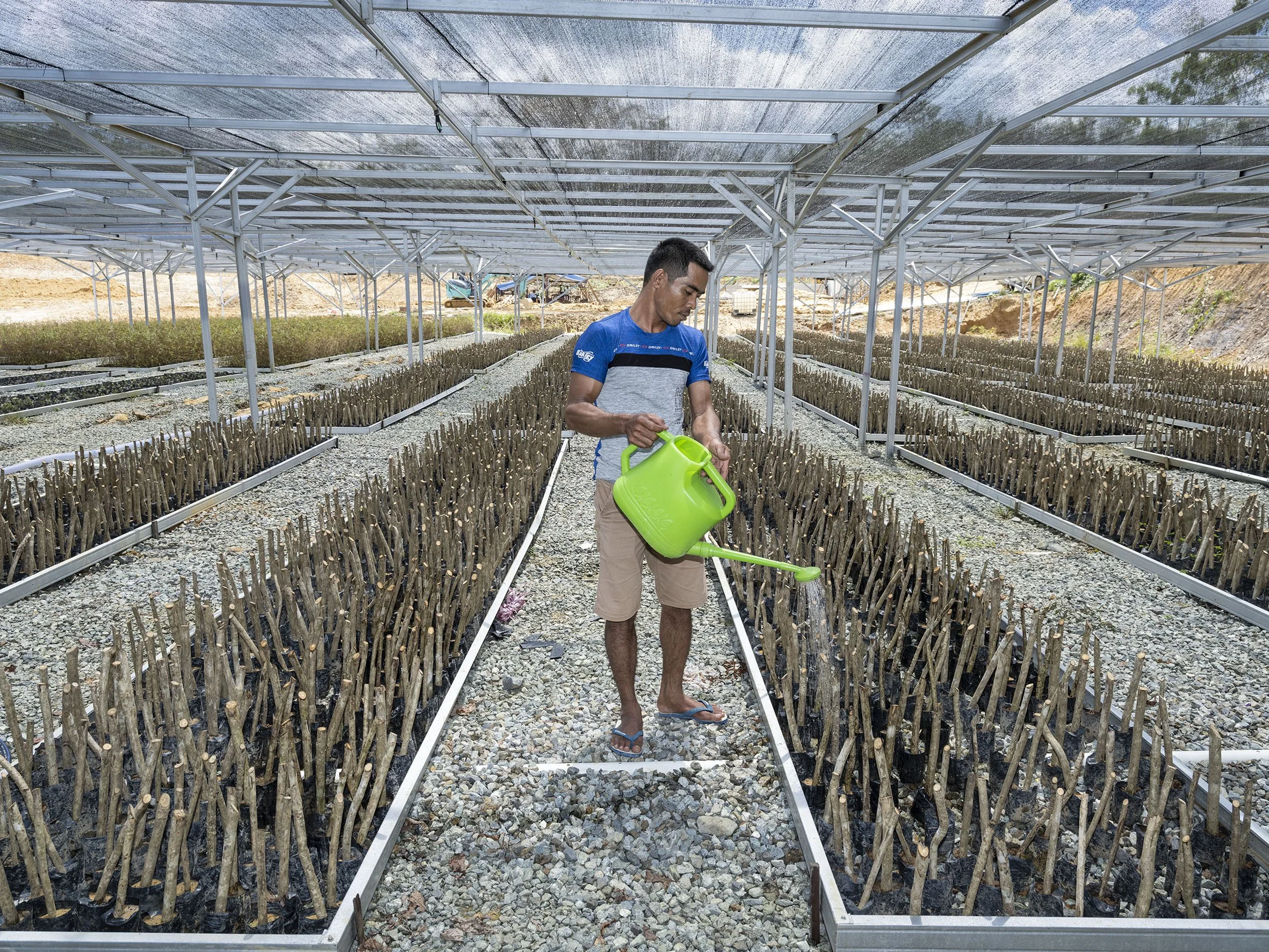
Young Peronema Canescens trees at Mentawir nursery, where trees are being grown to be replanted in the new city. September 1, 2022.
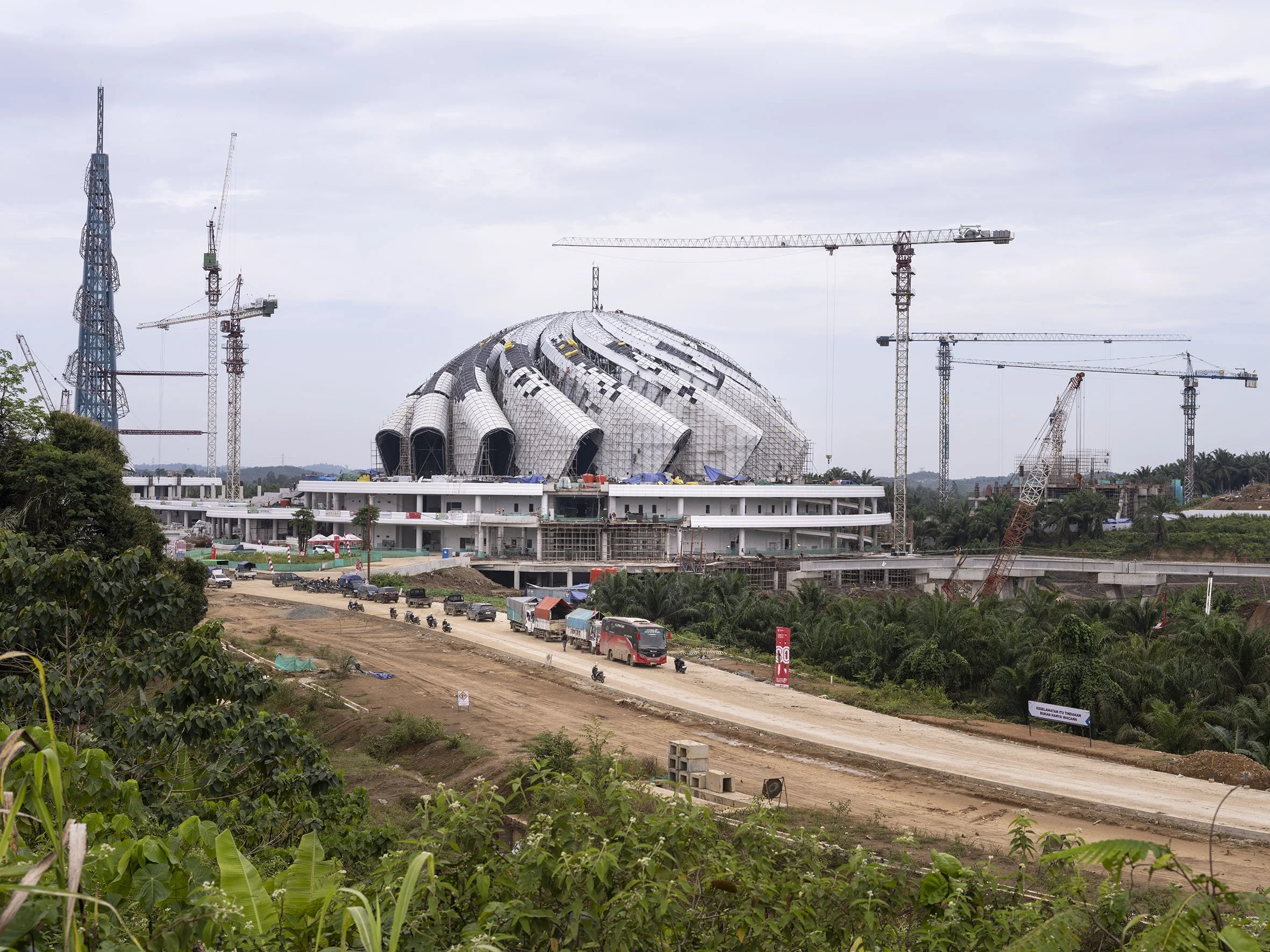
Nusantara Mosque under construction. August 25, 2025
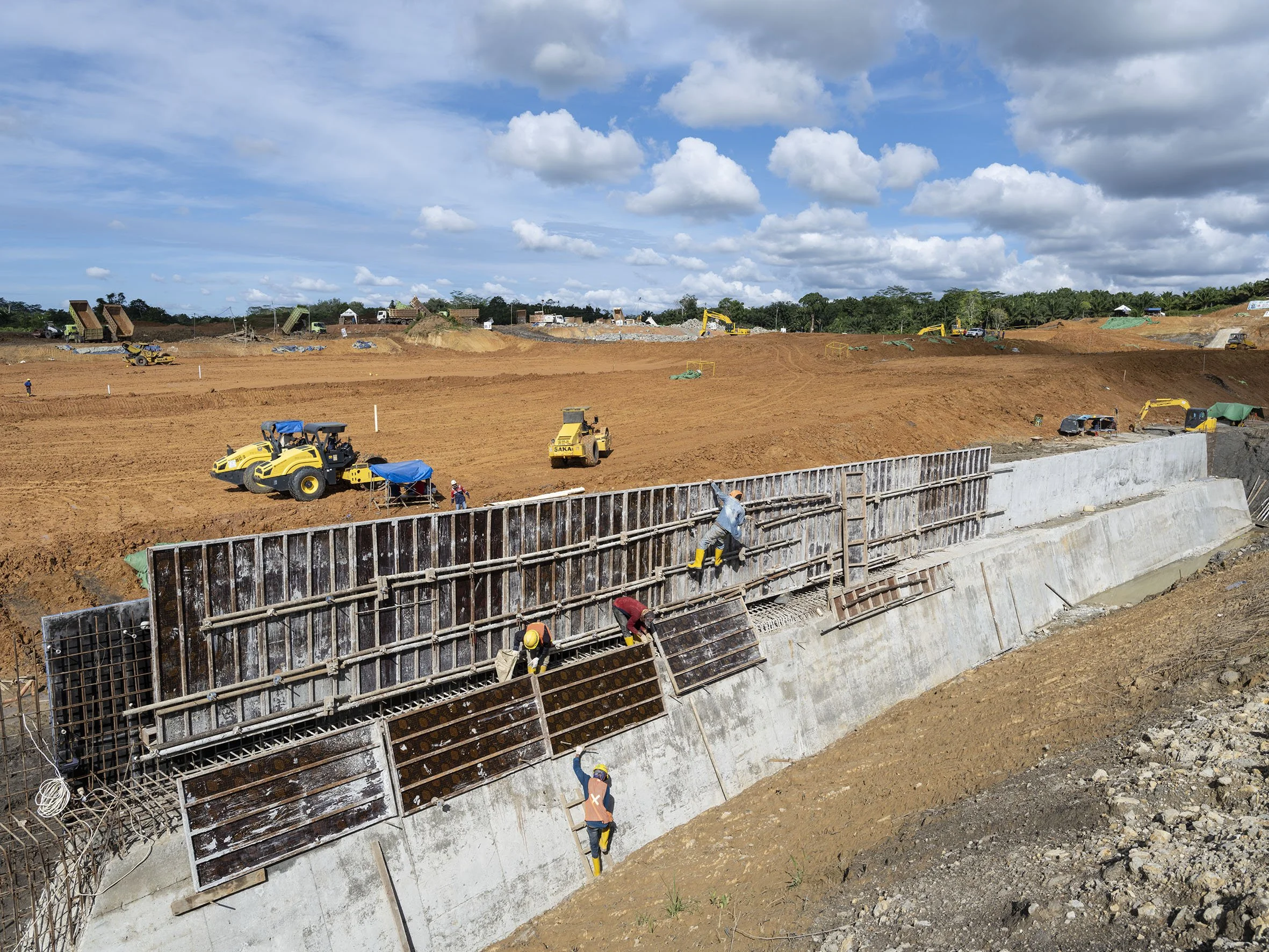
Construction site of the Sepaku Semoi Dam, which will provide water to the new capital. August 31, 2022.
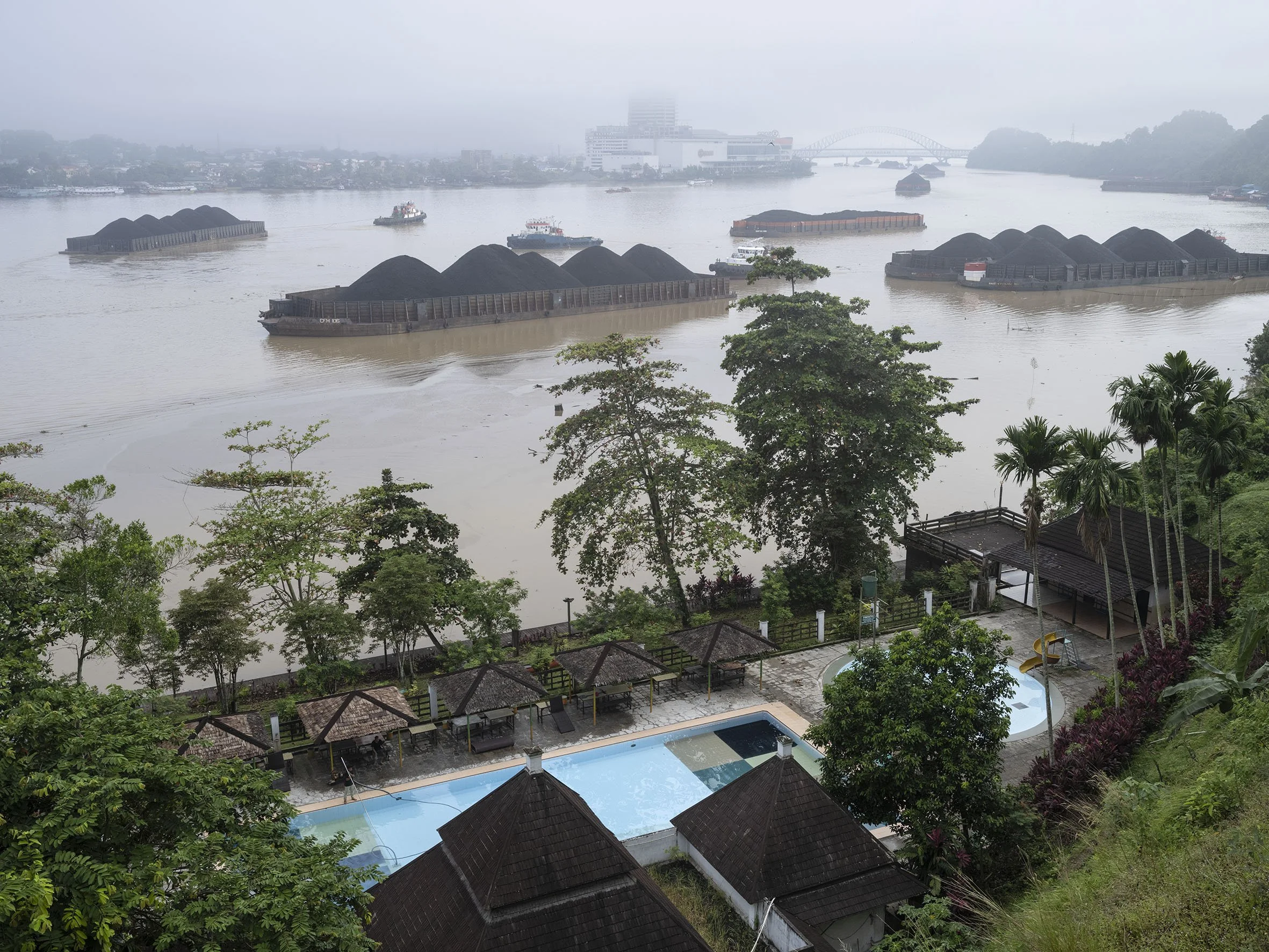
Every morning, dozens of barges loaded with coal navigate the Mahakam River in Samarinda, one of the gateways to the new capital. September 3, 2022.
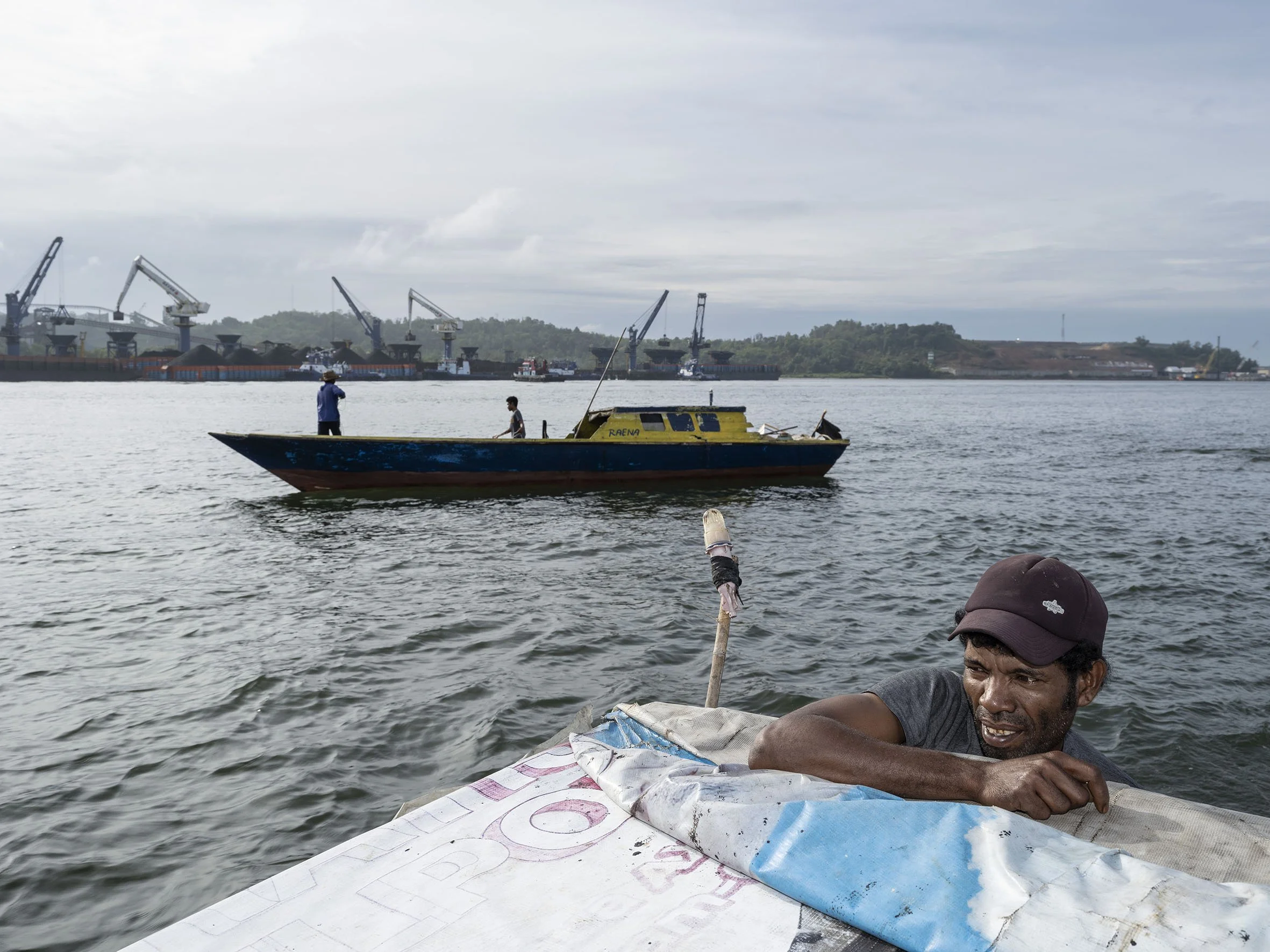
Fishermen sail past the coal-loading dock in Balikpapan Bay. They complain about declining fish stocks due to industrial pollution. September 6, 2022
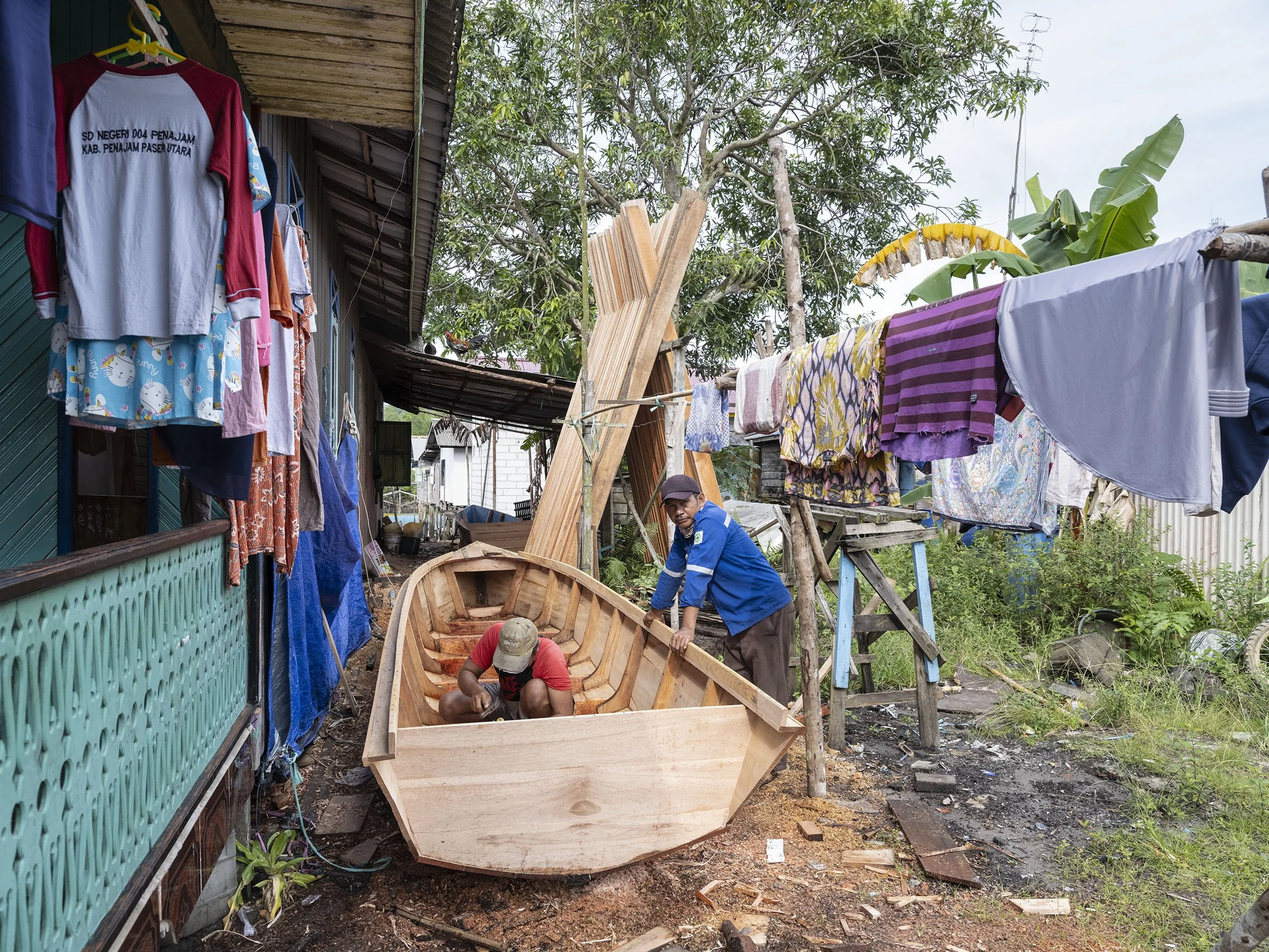
Fishing village Pantai Lango in Balikpapan Bay, the gateway over water to Nusantara. Locals fear pollution and disruption of marine wildlife due to increasing traffic and industrial activity. September 6, 2022.
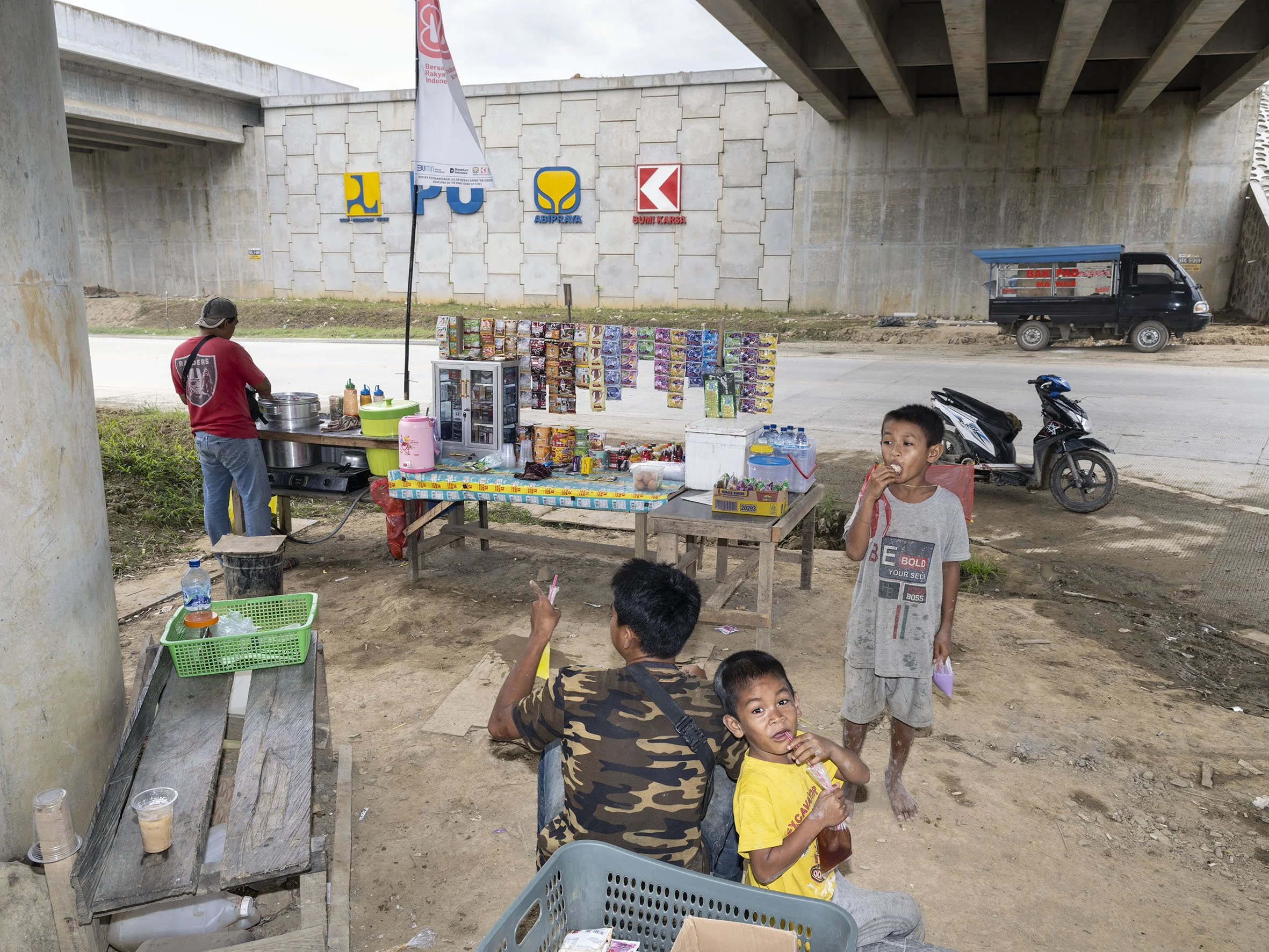
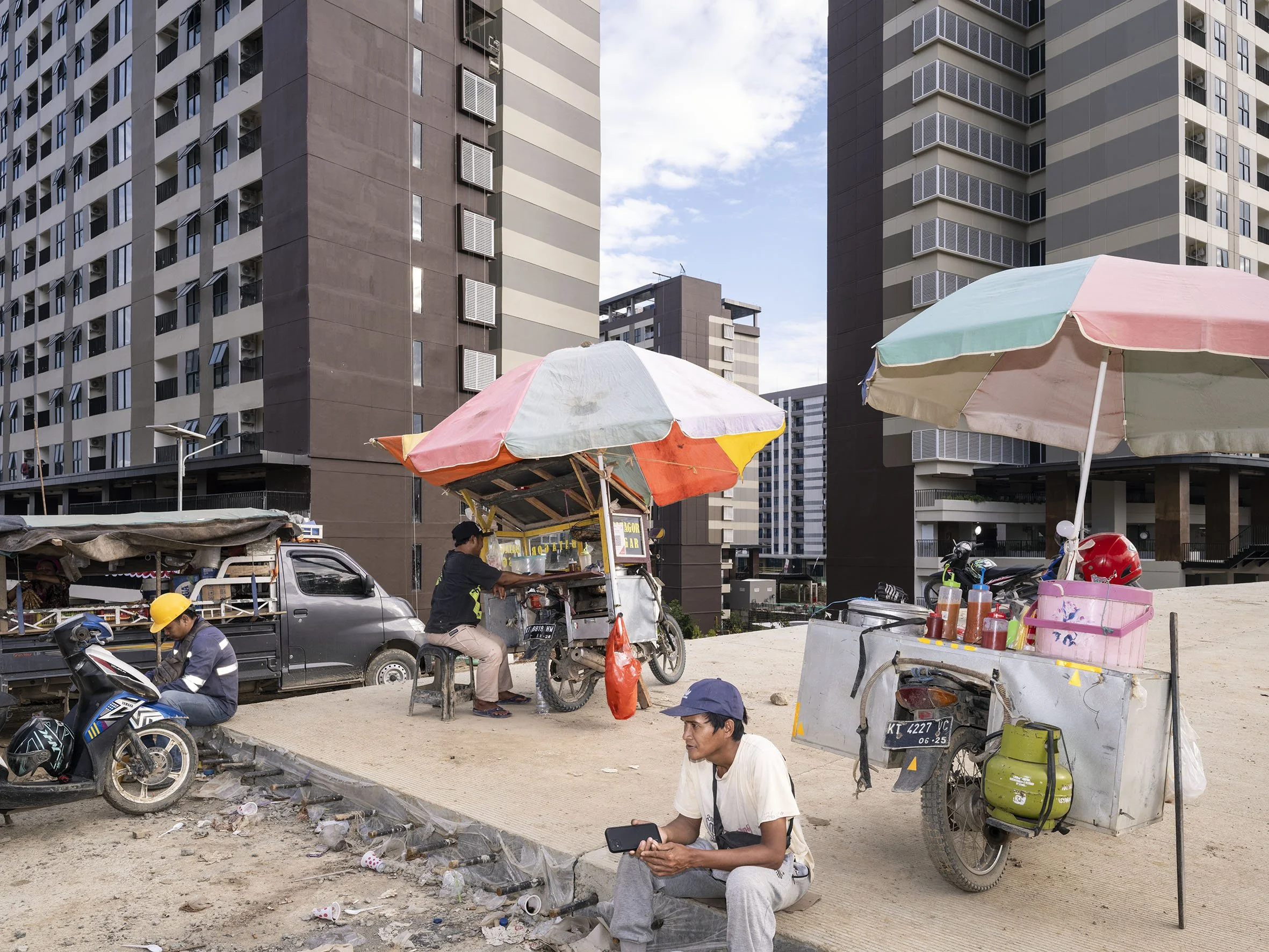
A street food stall under an overpass on the new toll road between Balikpapan and Nusantara. August 24, 2025
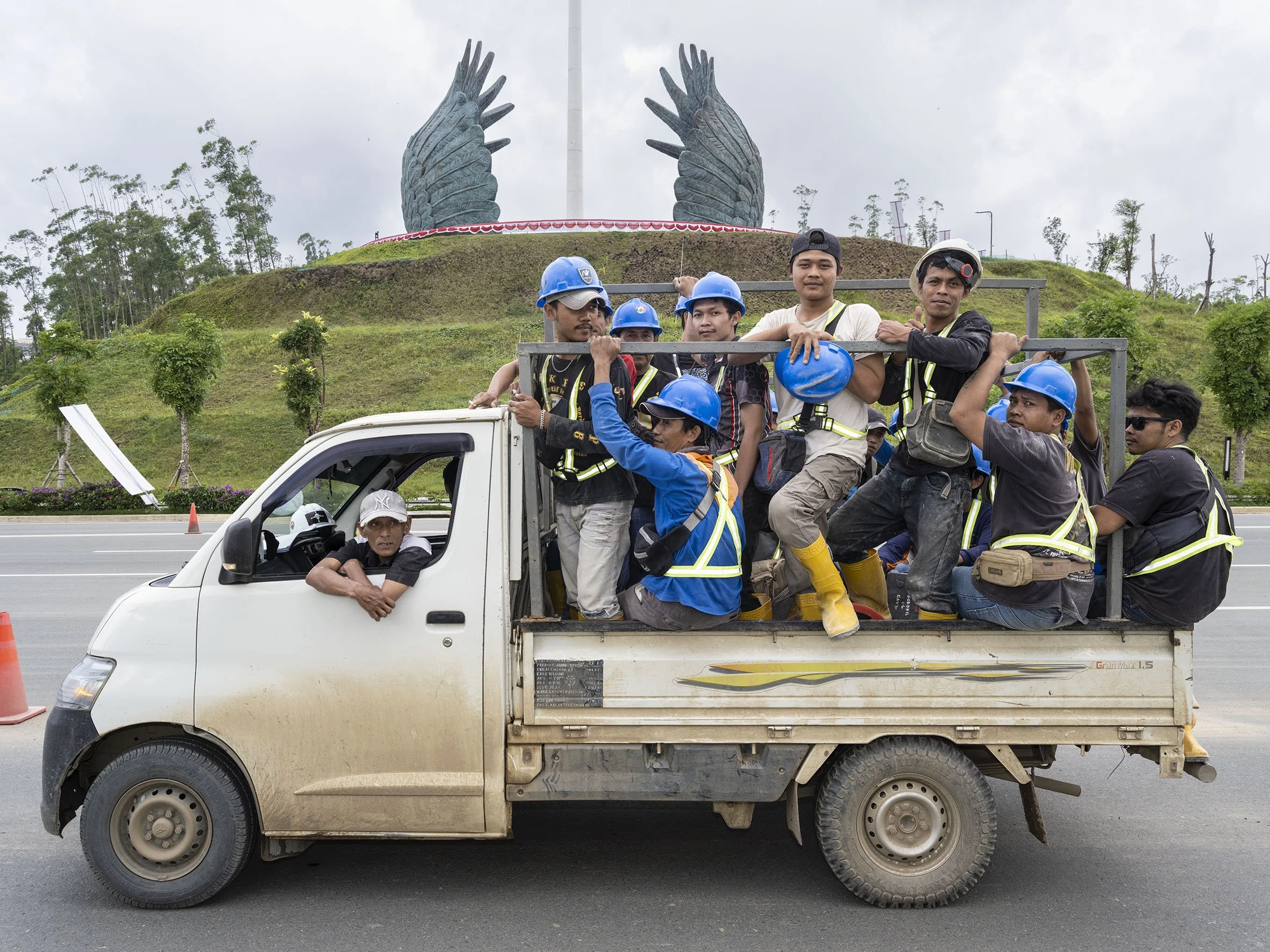
Construction workers drive past the Nusantara Protective Wings monument. August 24, 2025
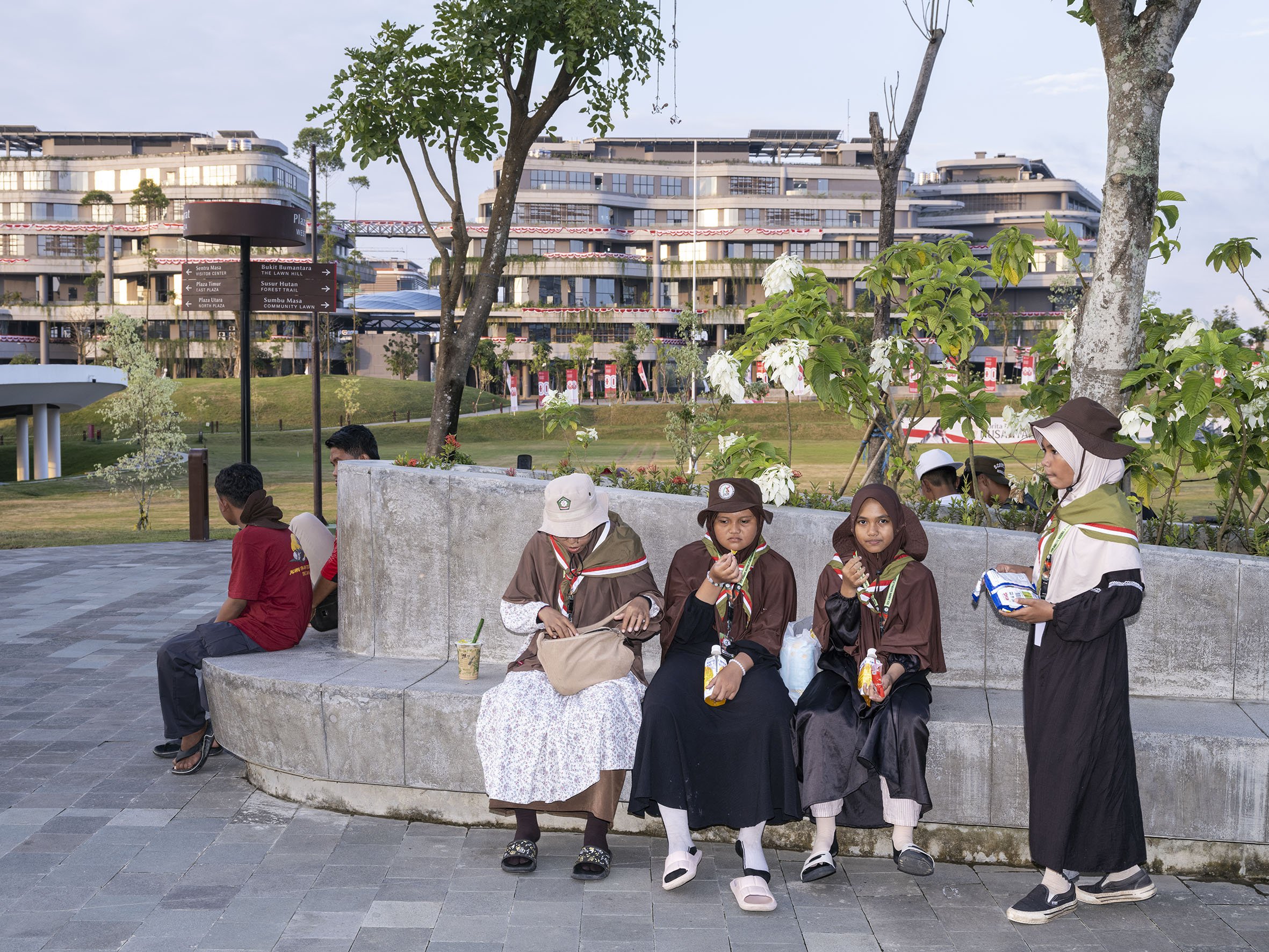
Scout girls on Plaza Seremoni, the central square in Nusantara. August 24, 2025
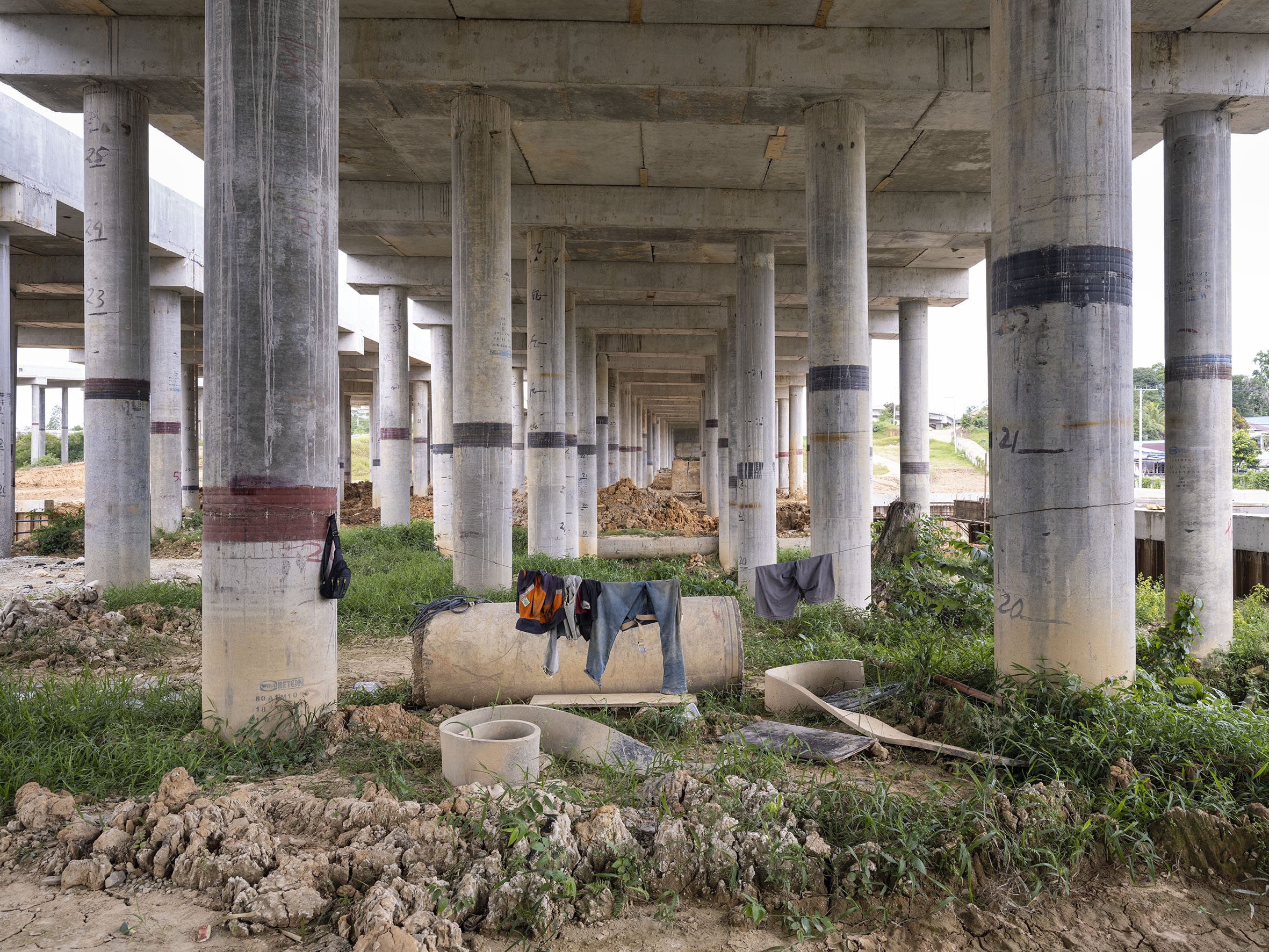
Construction site of the new toll road, connecting Balikpapan and Nusantara. August 28, 2025
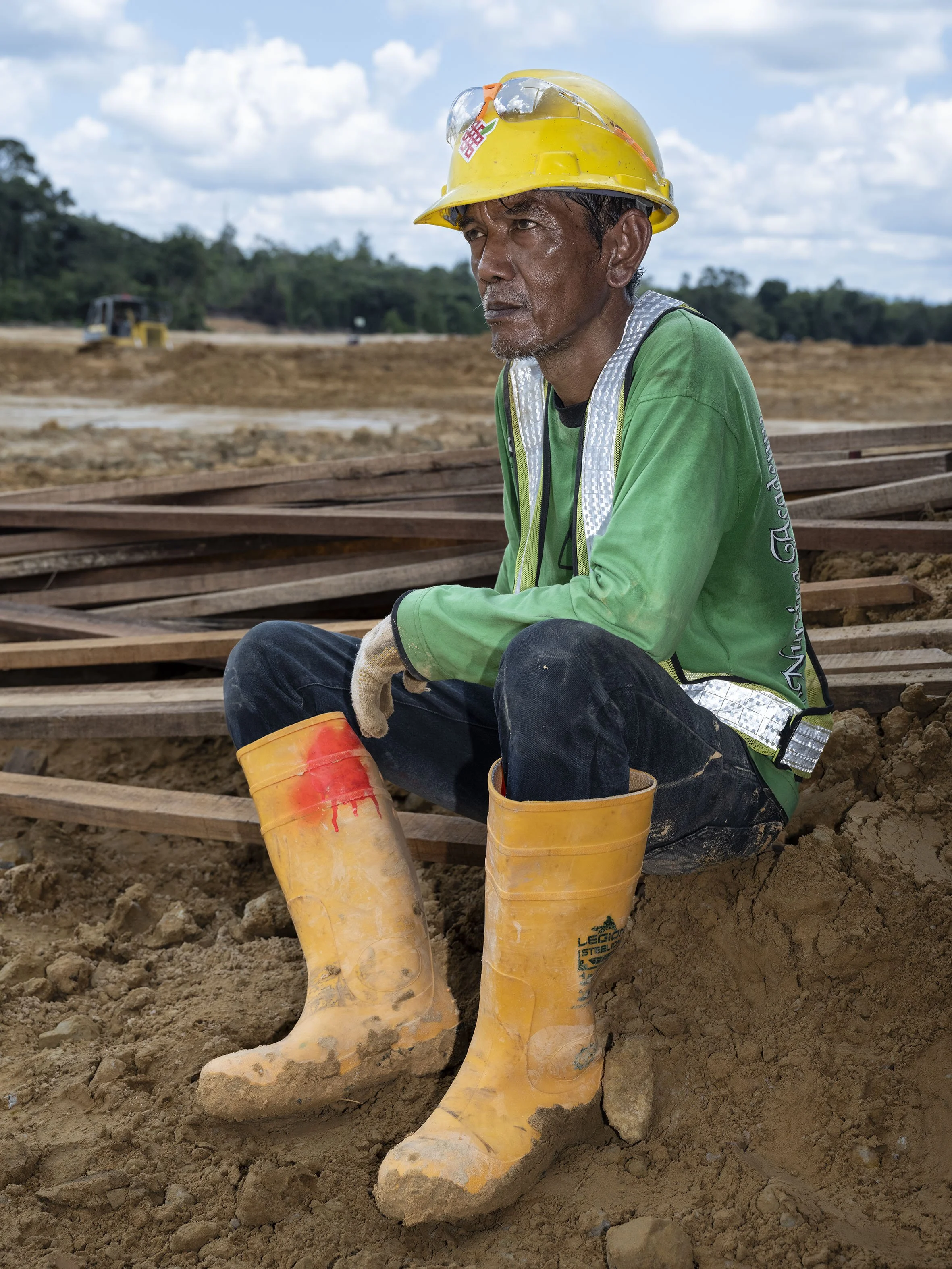
Worker at Mentawir nursery. September 1, 2022.
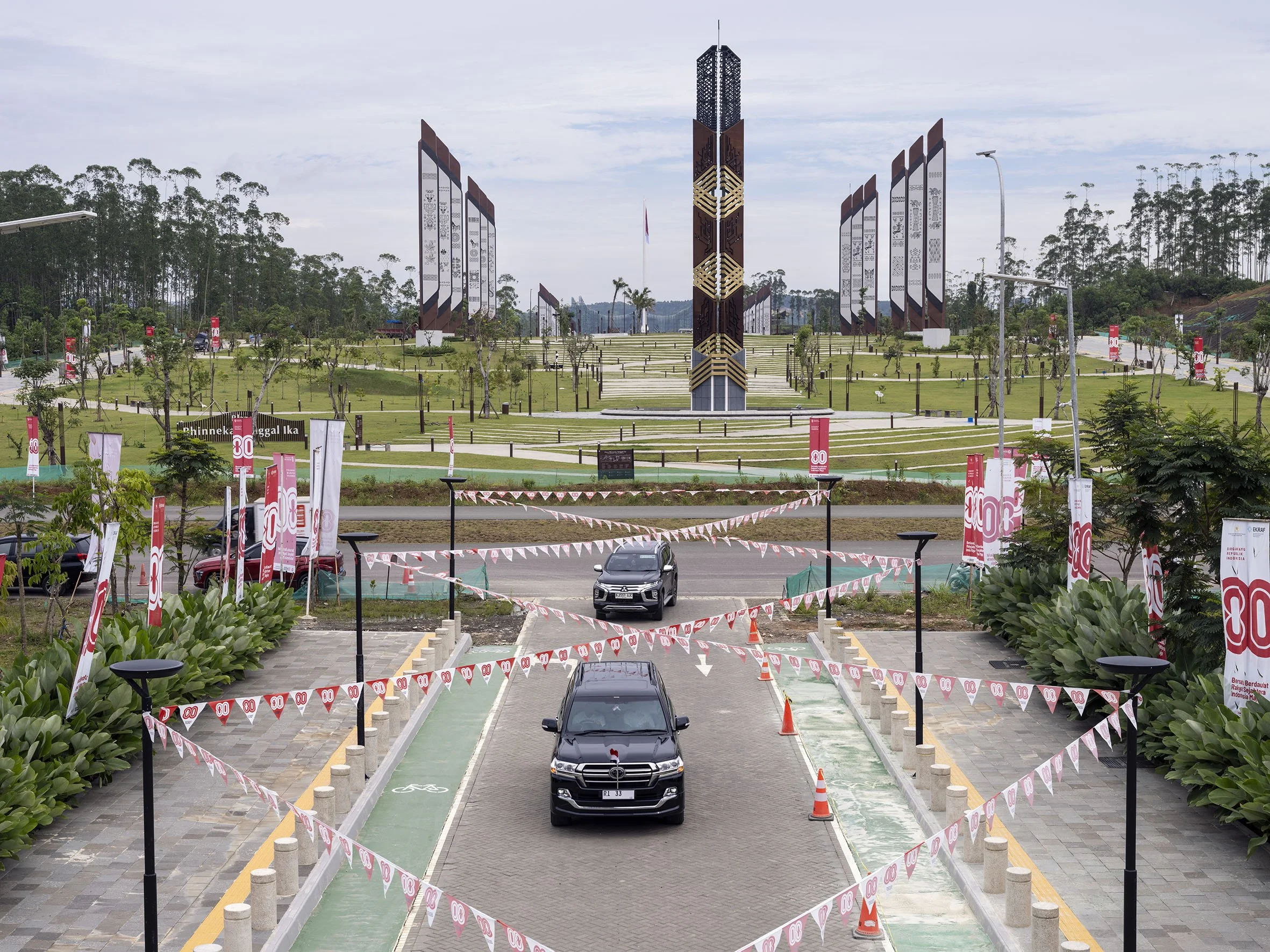
Government cars drive into the headquarters of the Nusantara Capital City Authority, overlooking Plaza Bhinneka Tunggal Ika. August 25, 2025
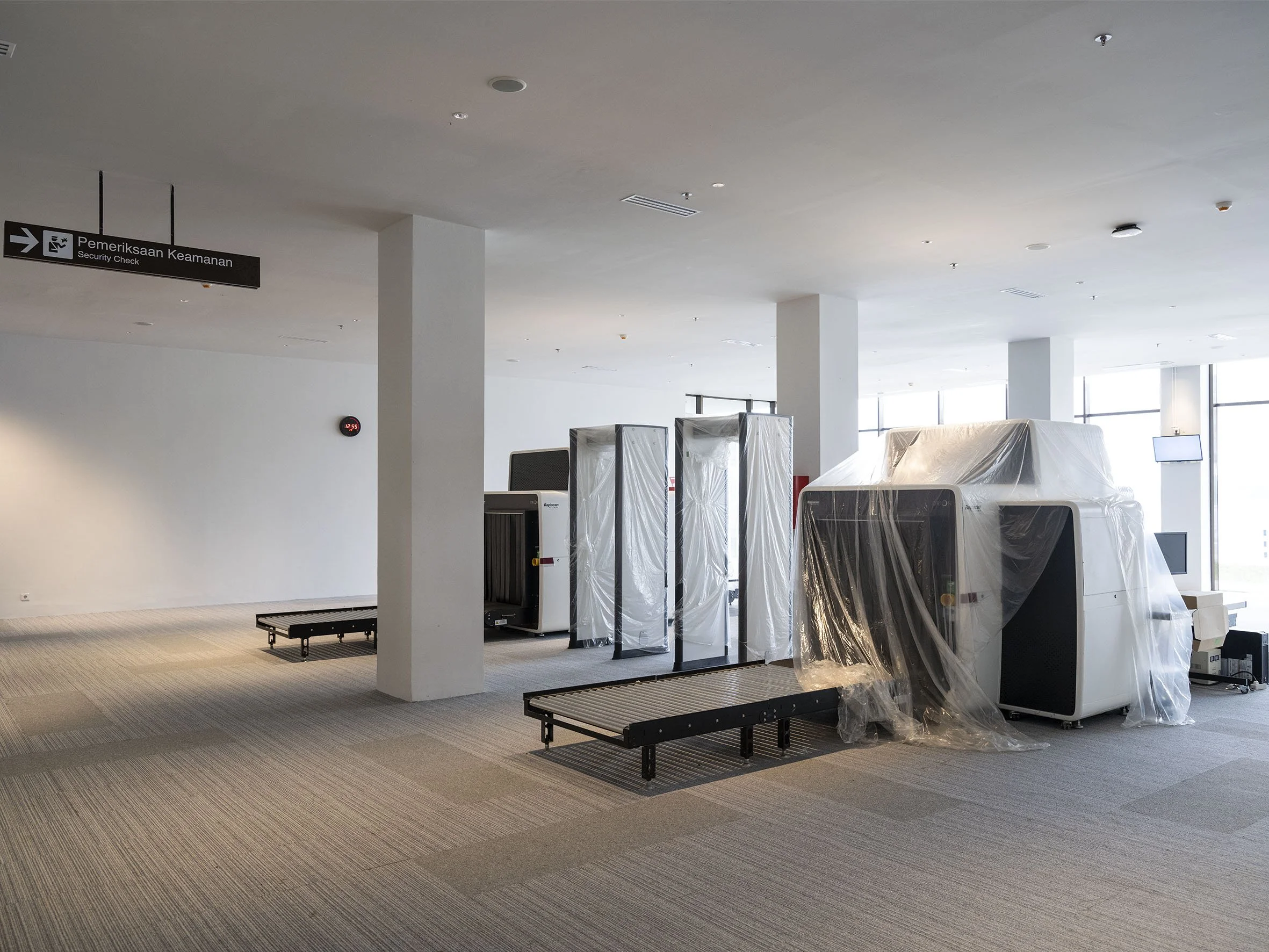
The new Nusantara International Airport is not yet operational. August 24, 2025
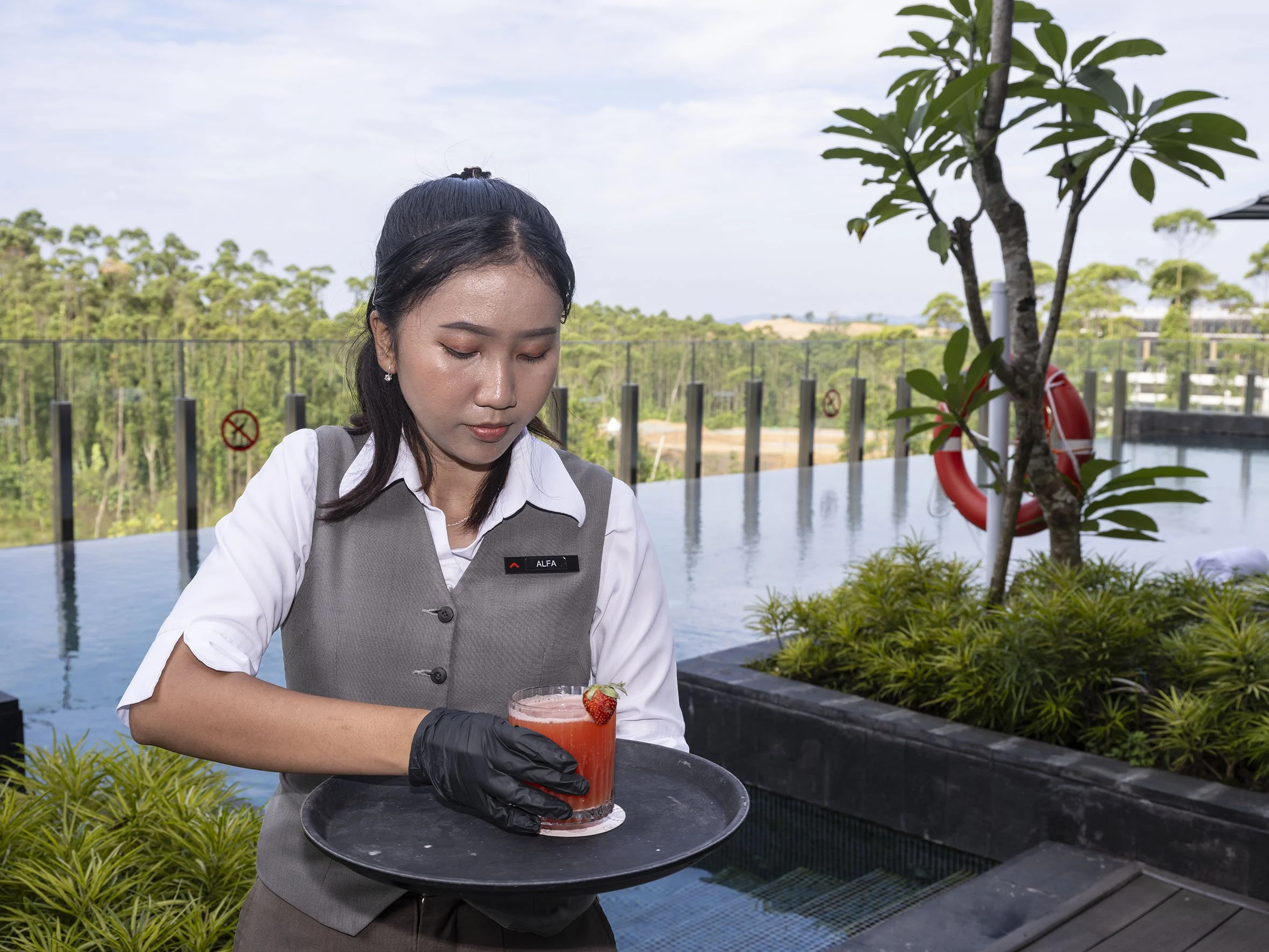
Waitress serving drinks at the outdoor swimming pool of the new five star Swissotel, the first luxury hotel in Nusantara. August 25, 2025
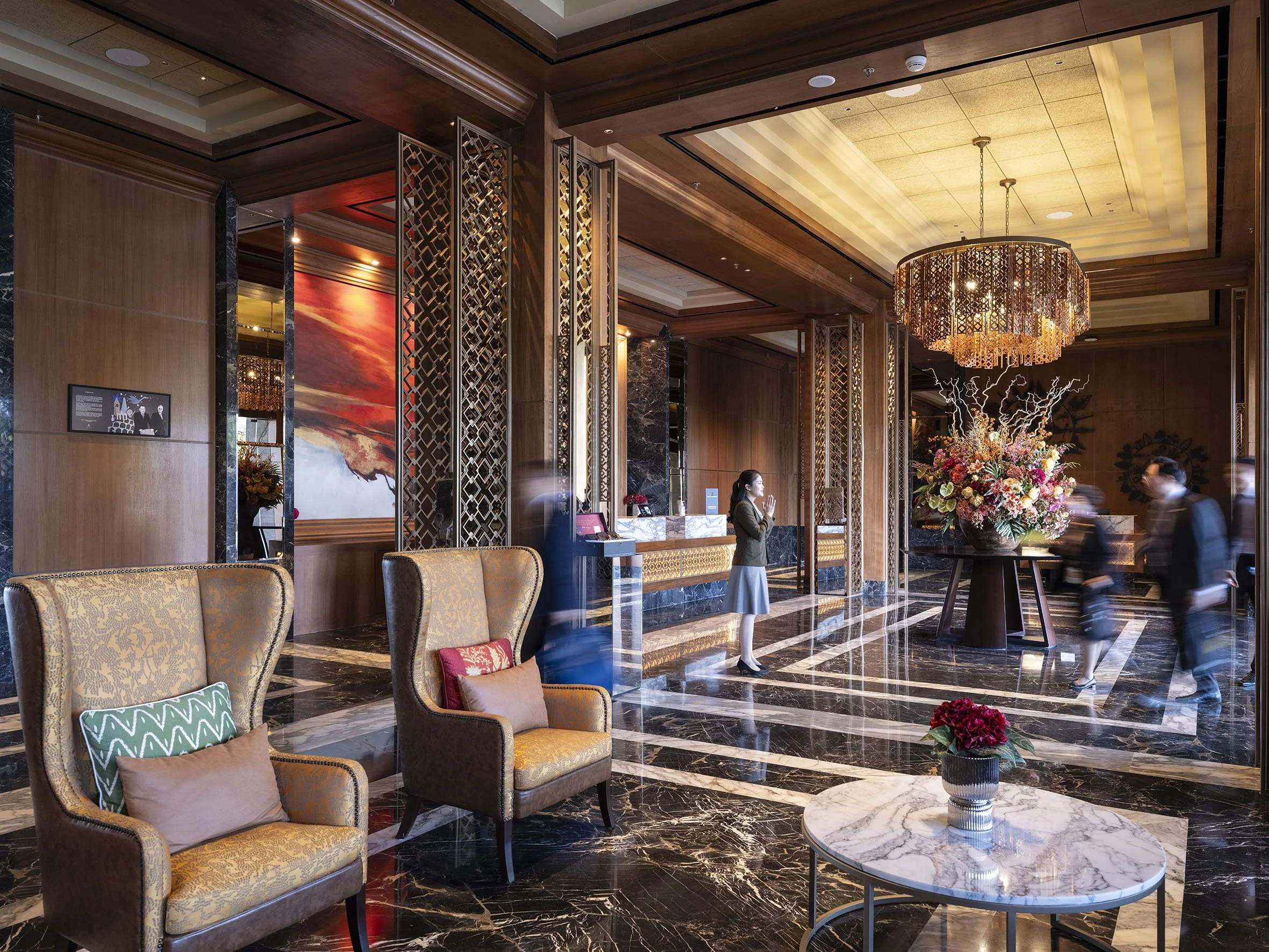
Lobby of the new five star Swissotel, the first luxury hotel in Nusantara. August 25, 2025
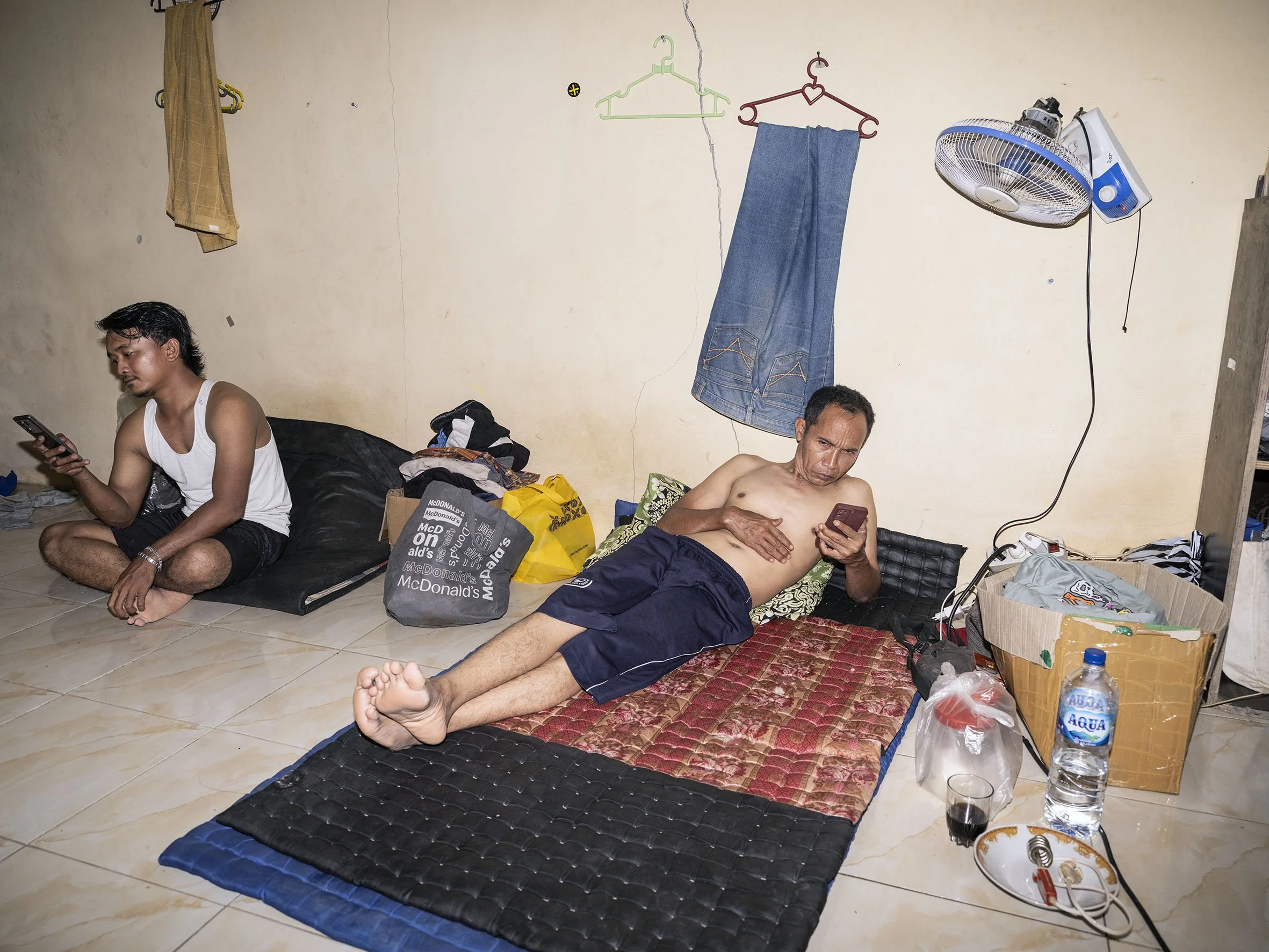
Construction workers from Java, seven of whom share a simple room in Bumi Harapan. They work seven days a week and earn about 260 euros a month. August 27, 2025
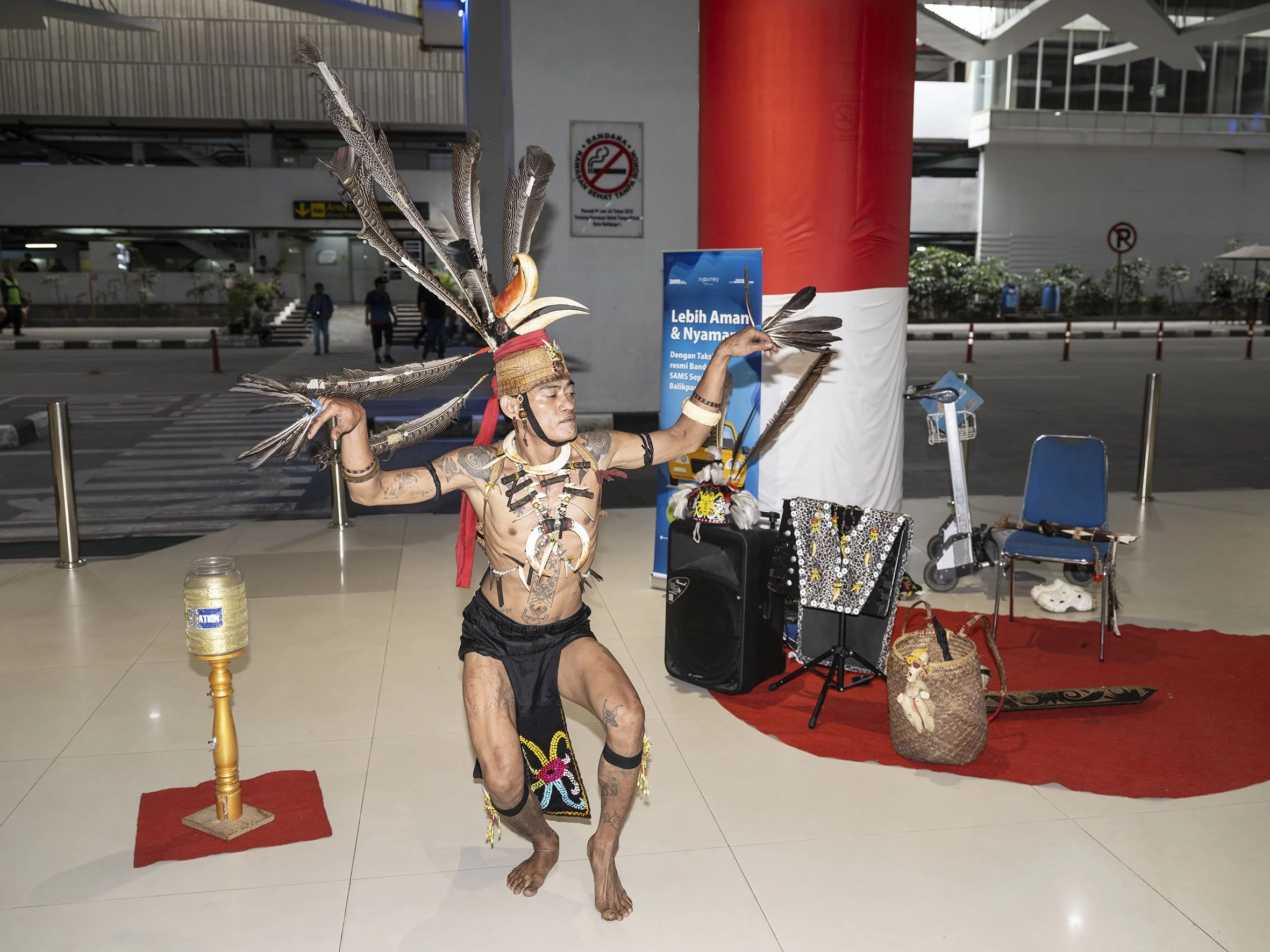
Agus Leo Putra performs traditional Dayak dances in front of the arrivals hall at Balikpapan Airport in East Kalimantan to welcome visitors. August 15, 2025
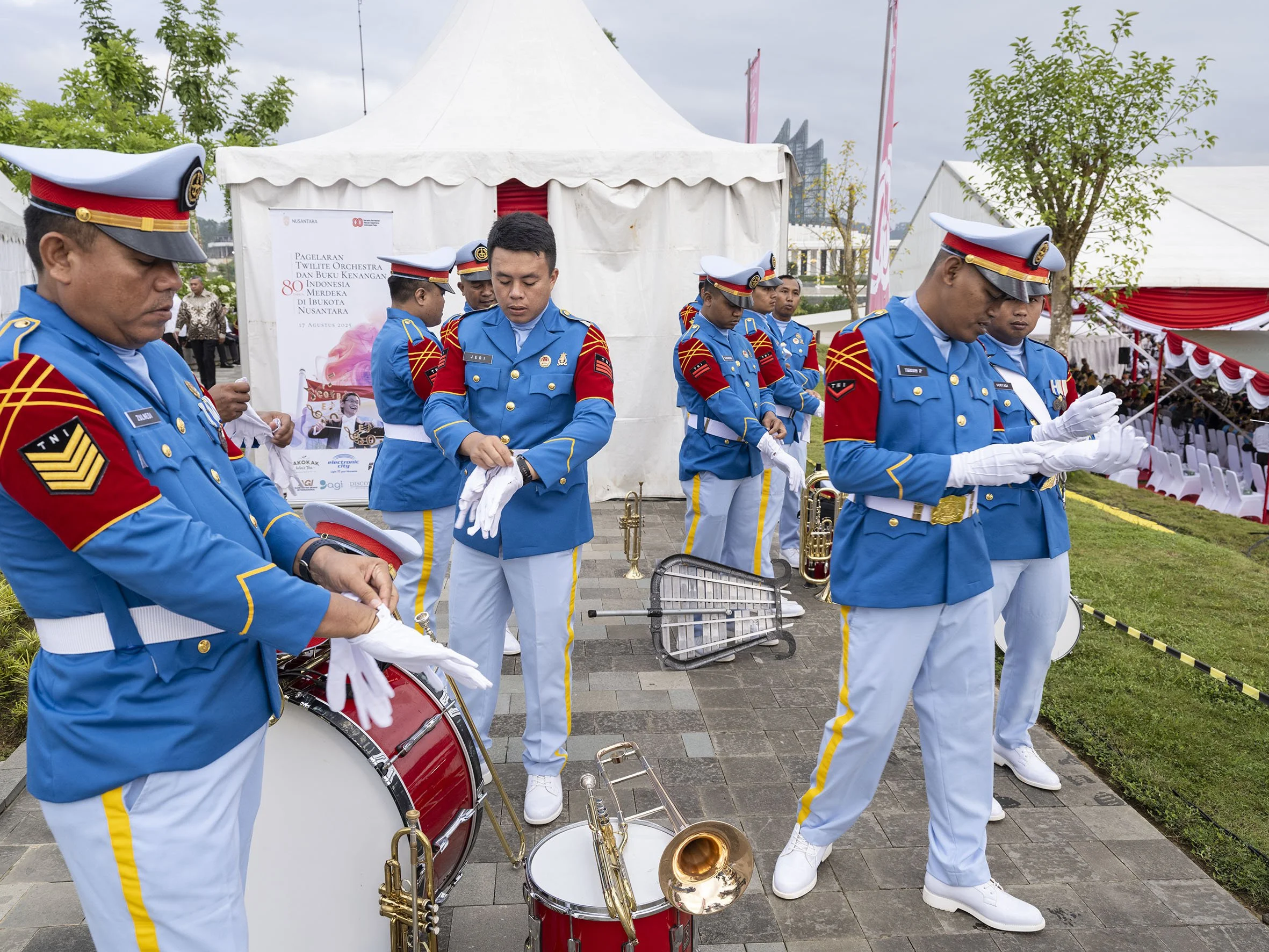
A military brass band prepares for the celebration of the 80th Independence Day of Indonesia, on Plaza Seremoni in Nusantara. August 17, 2025
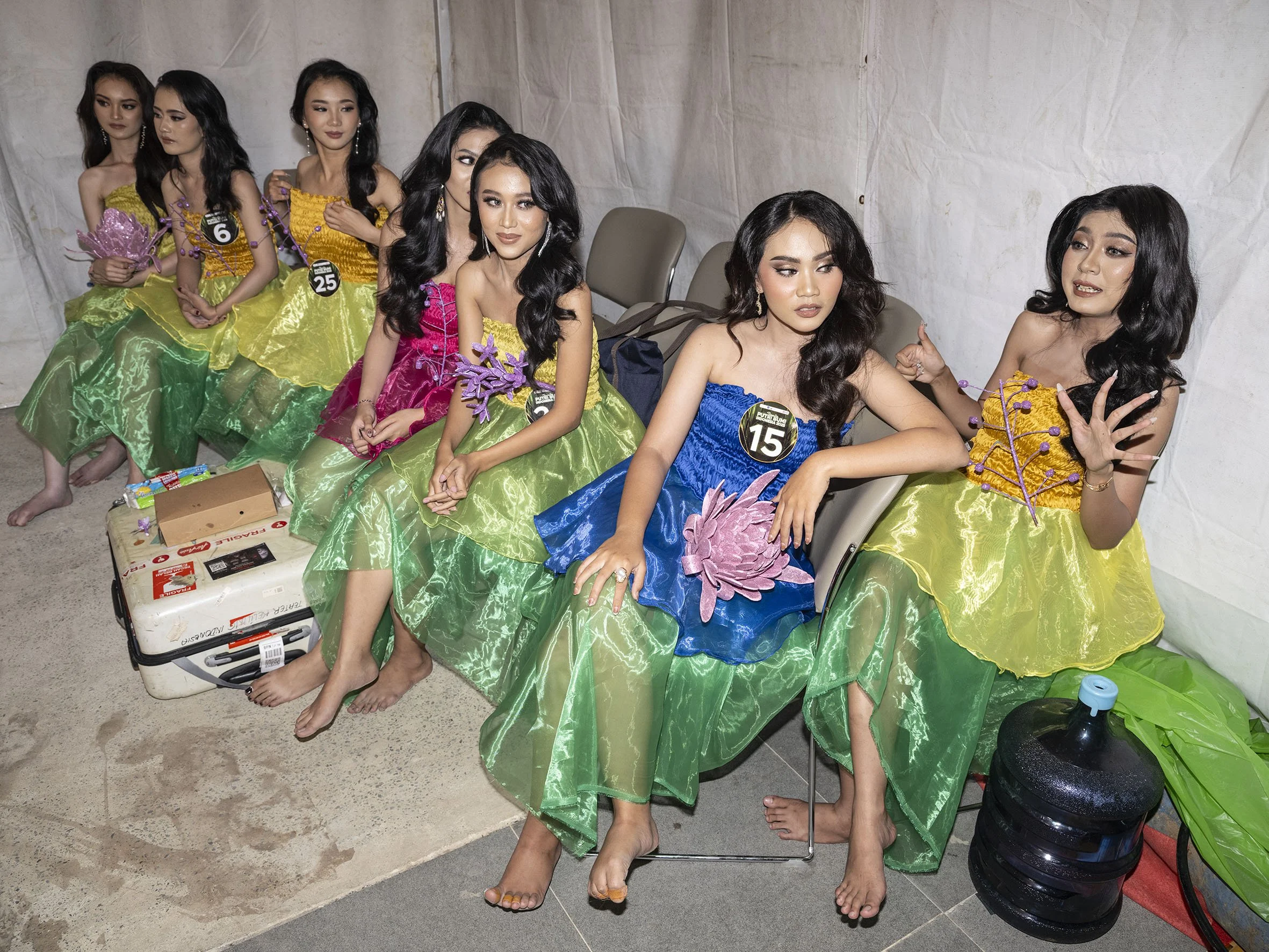
Candidates for the El John Pageant festival are waiting backstage before their performance. The beauty contest, held in Nusantara, will award Miss Earth and Miss Tourism, to promote ecological awareness and tourism to the new capital. August 23, 2025

A singer rehearses backstage before performing at the El John Pageant festival, a beauty contest that promotes tourism, environmental, and educational awareness. It’s the first time the festival has been organised in Nusantara. August 25, 2025

Nightclub Deja Vu in the city of Samarinda, the gateway to the new capital. September 3, 2022
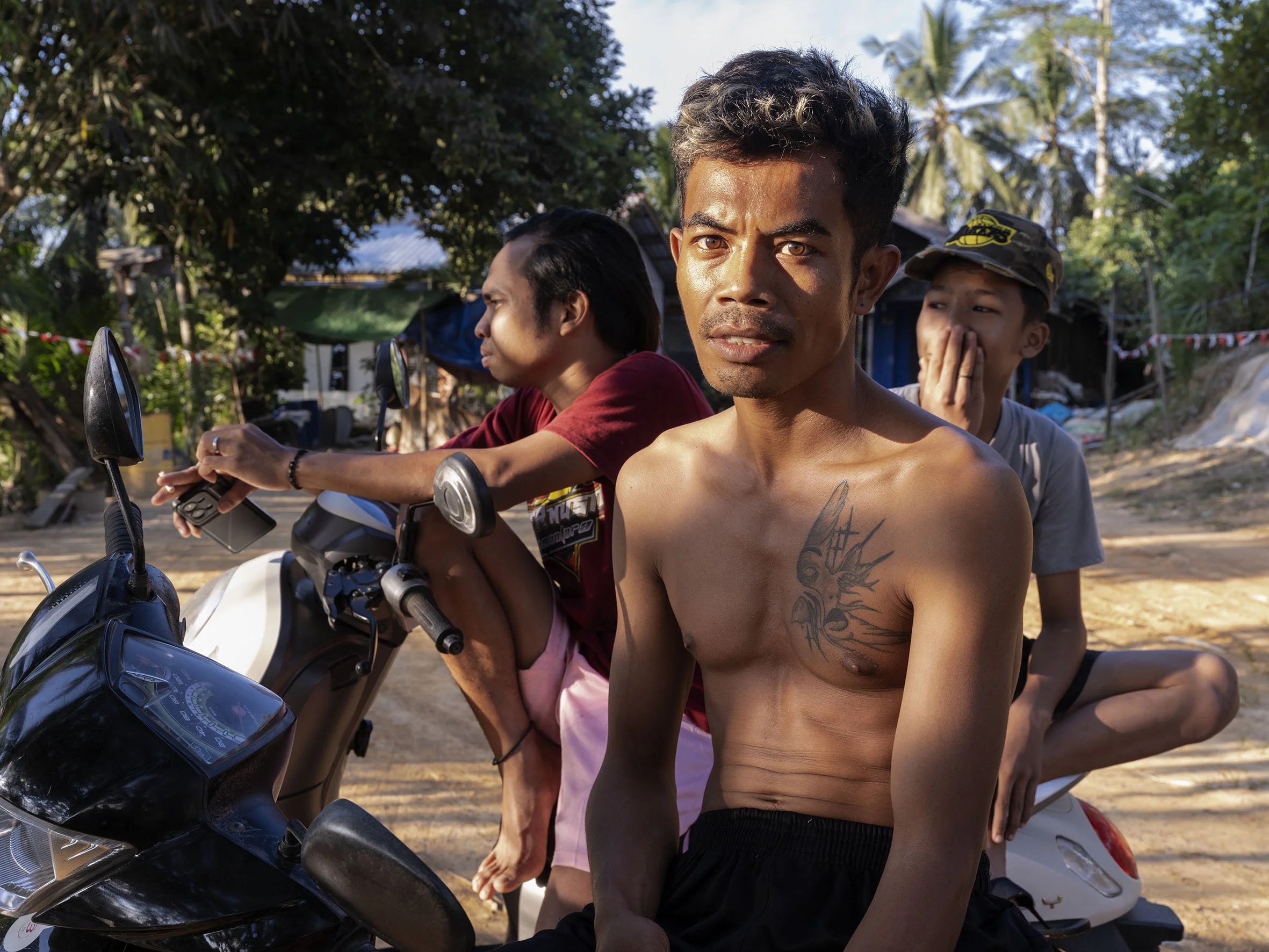
Villagers in Sepaku Lama. The new megacity will have a significant impact on traditional life in the nearby villages, leading to fears of displacement and the loss of land and possessions. August 27, 2025
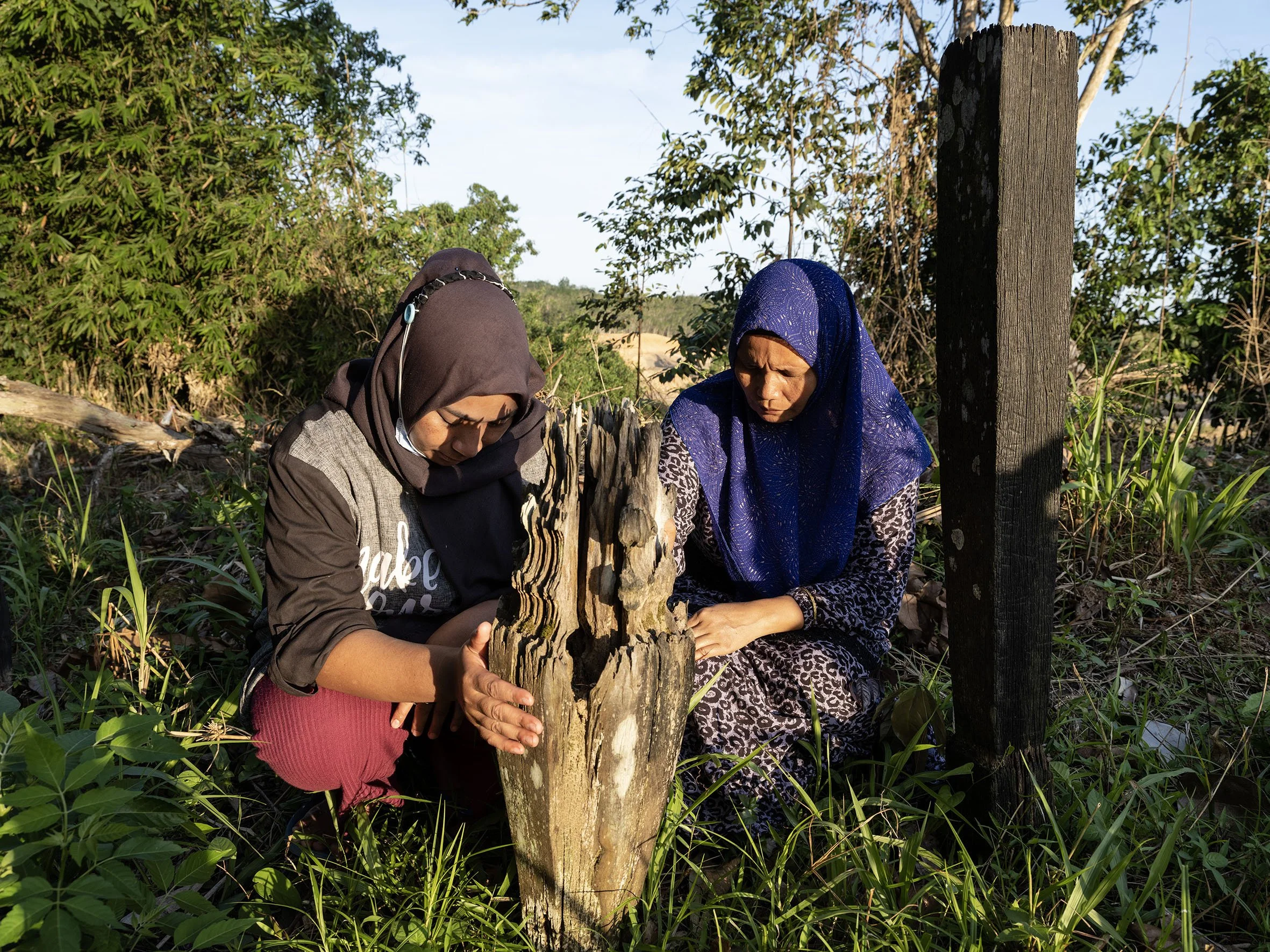
Samira and Sabardin pray at the graves of their ancestors in the ancient cemetery of the indigenous Balik tribe in the village of Sepaku. The cemetery was located on the construction site of the new Intake Dam and was later removed. August 30, 2022
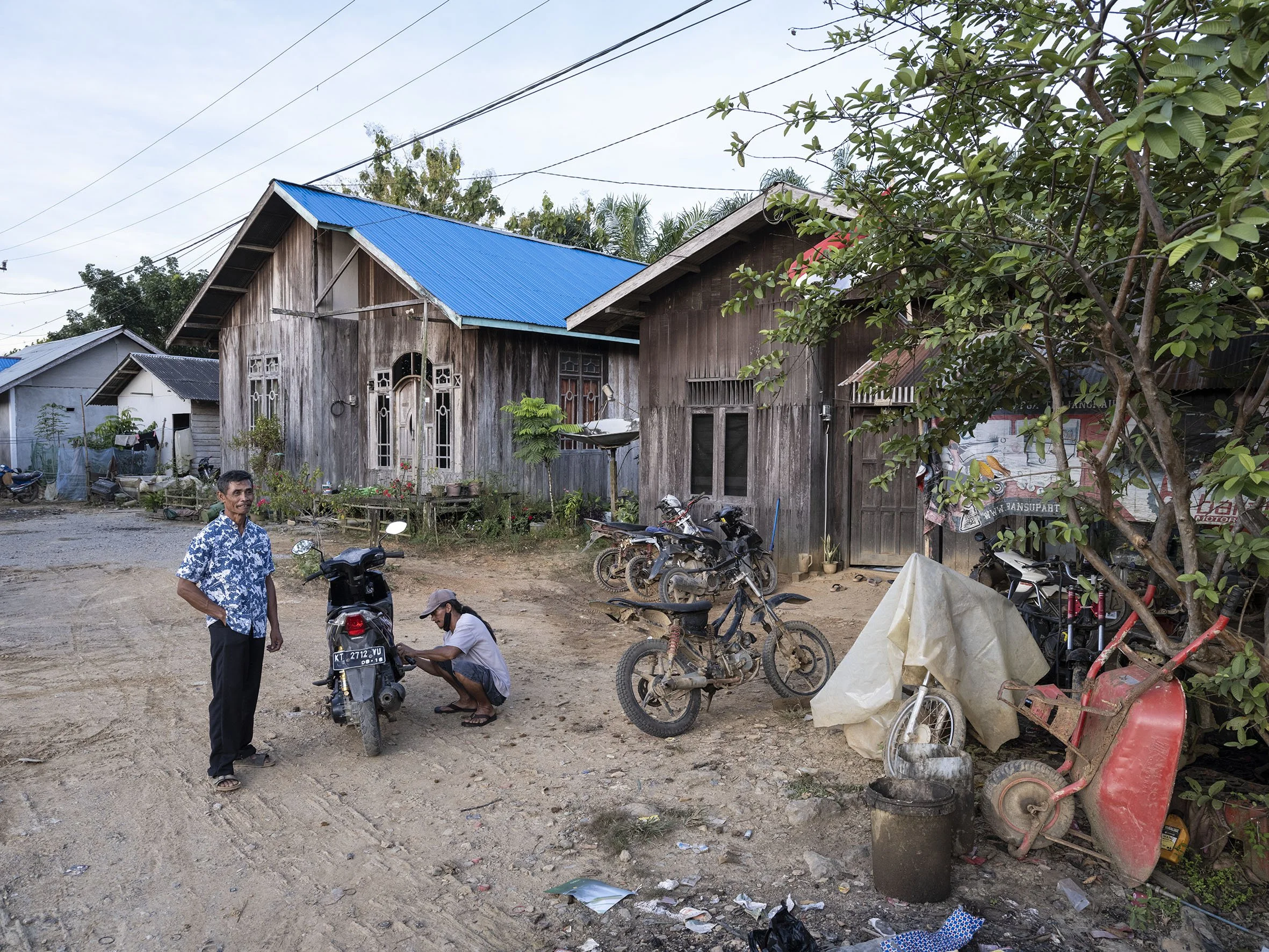
Sepaku Lama, September 1, 2022
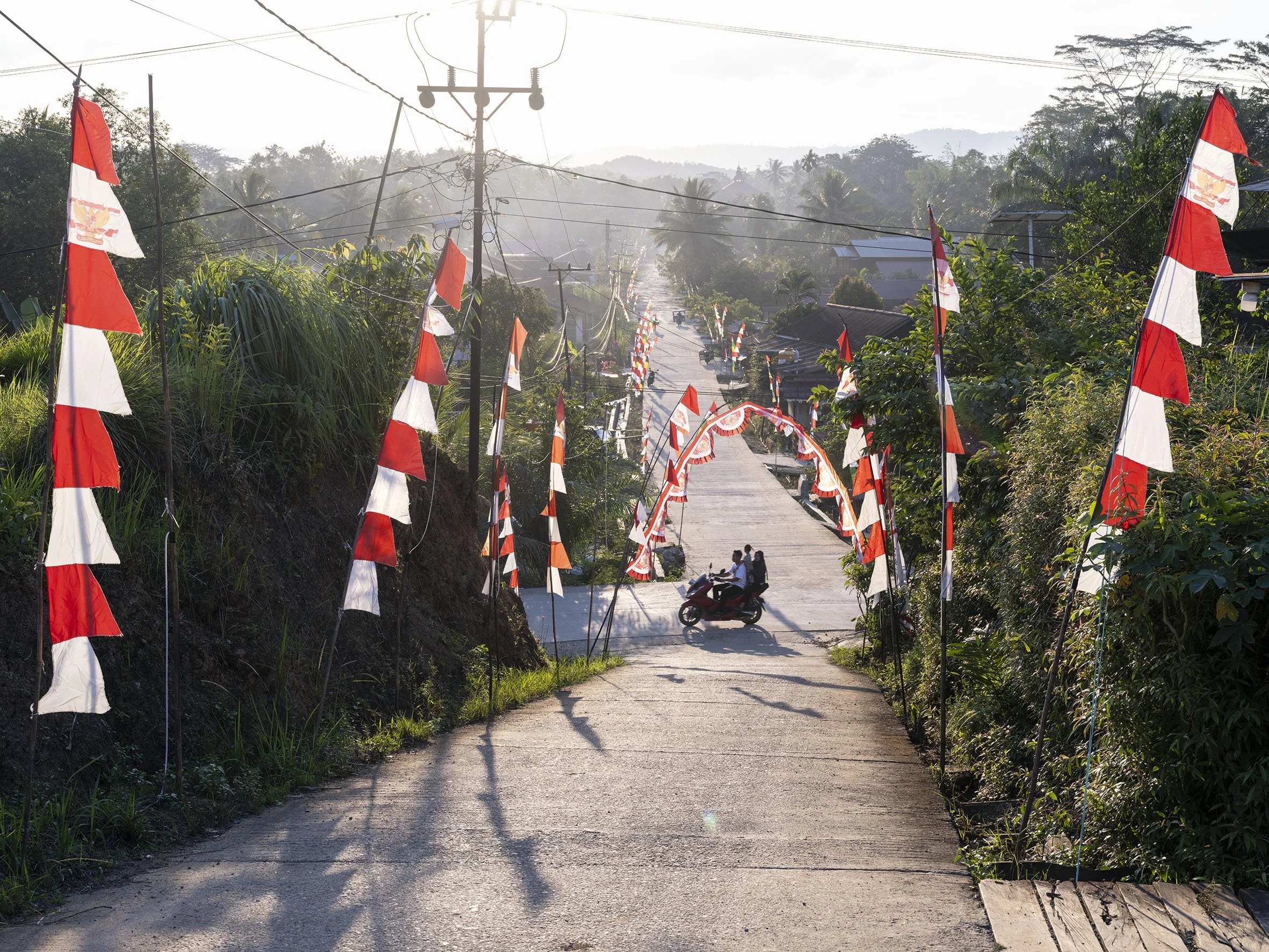
Sepaku Lama, August 27, 2025
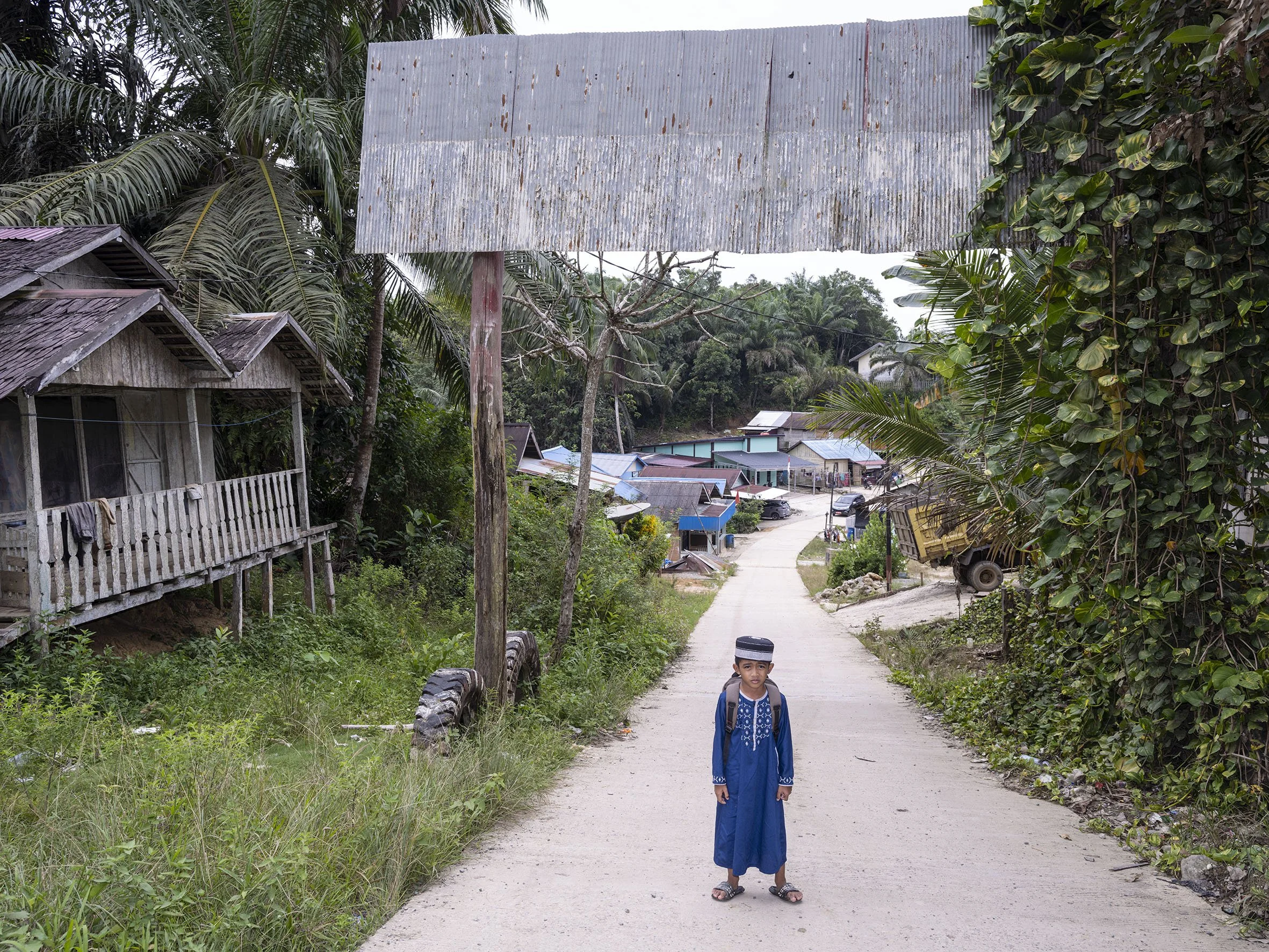
Pemaluan village, near Nusantara. August 27, 2025
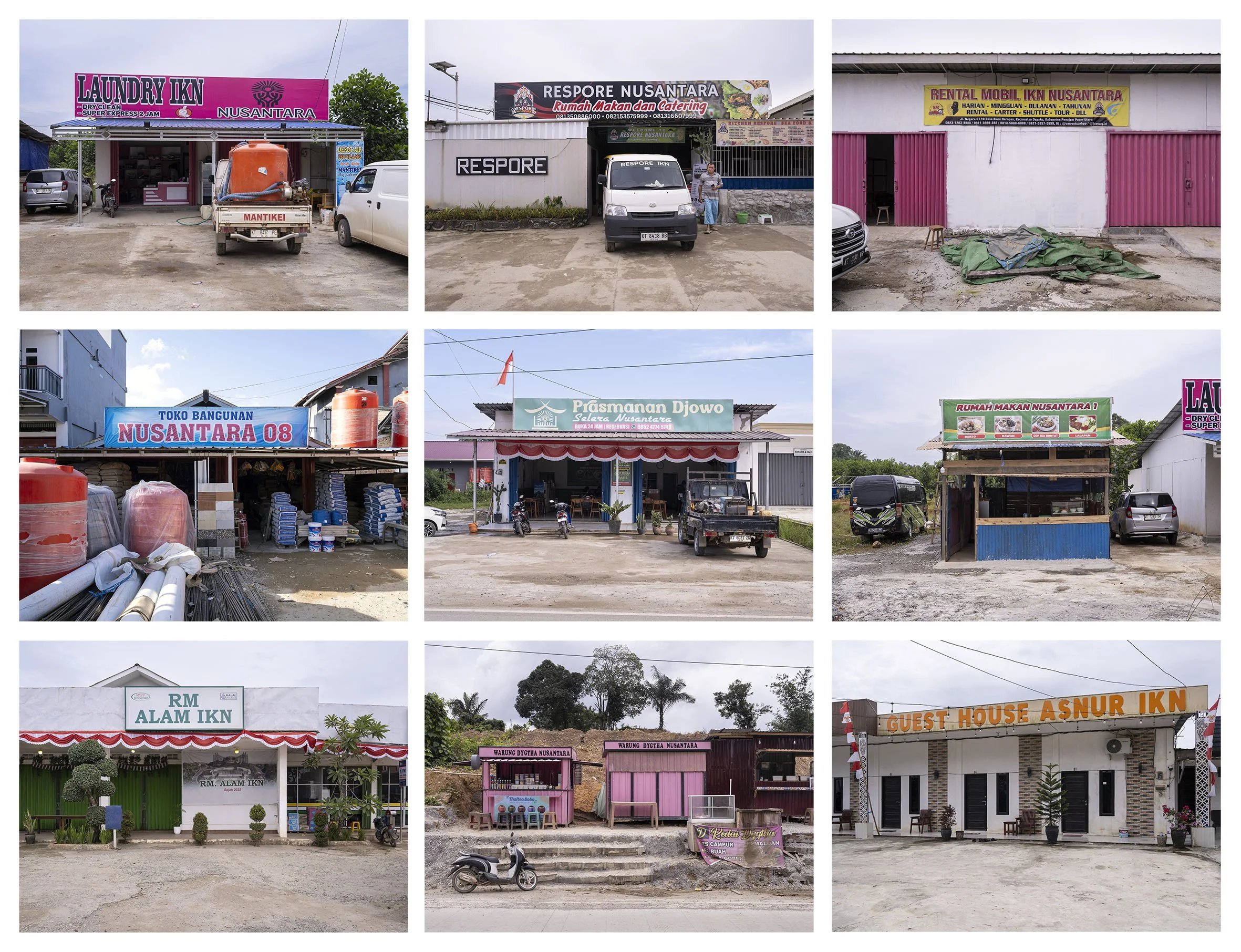
In the surrounding villages, shop owners are naming their businesses after the new capital, hoping to profit financially from the emerging capital. August 27, 2025
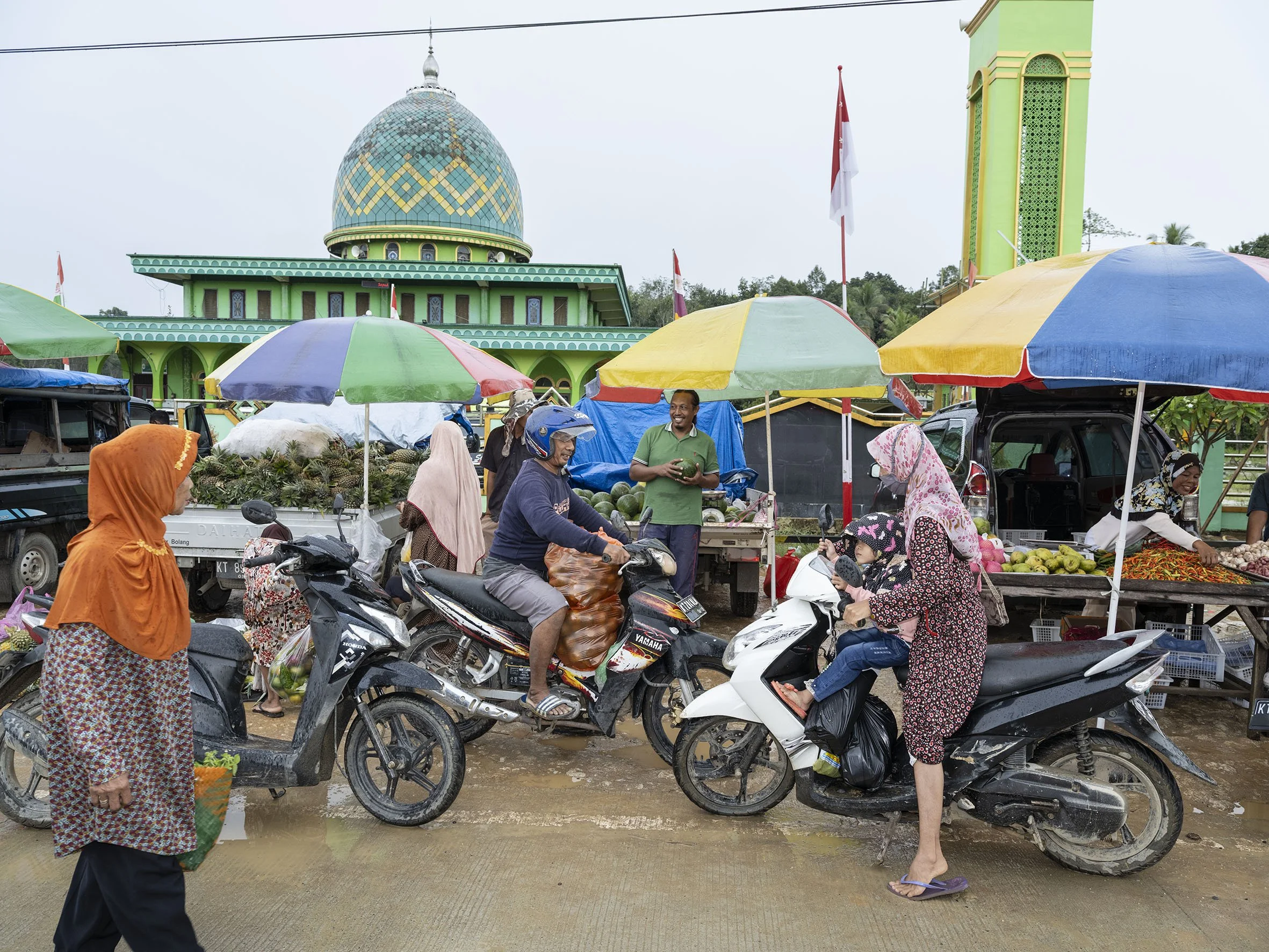
Market in Sukaraja, Sepaku. August 31, 2022
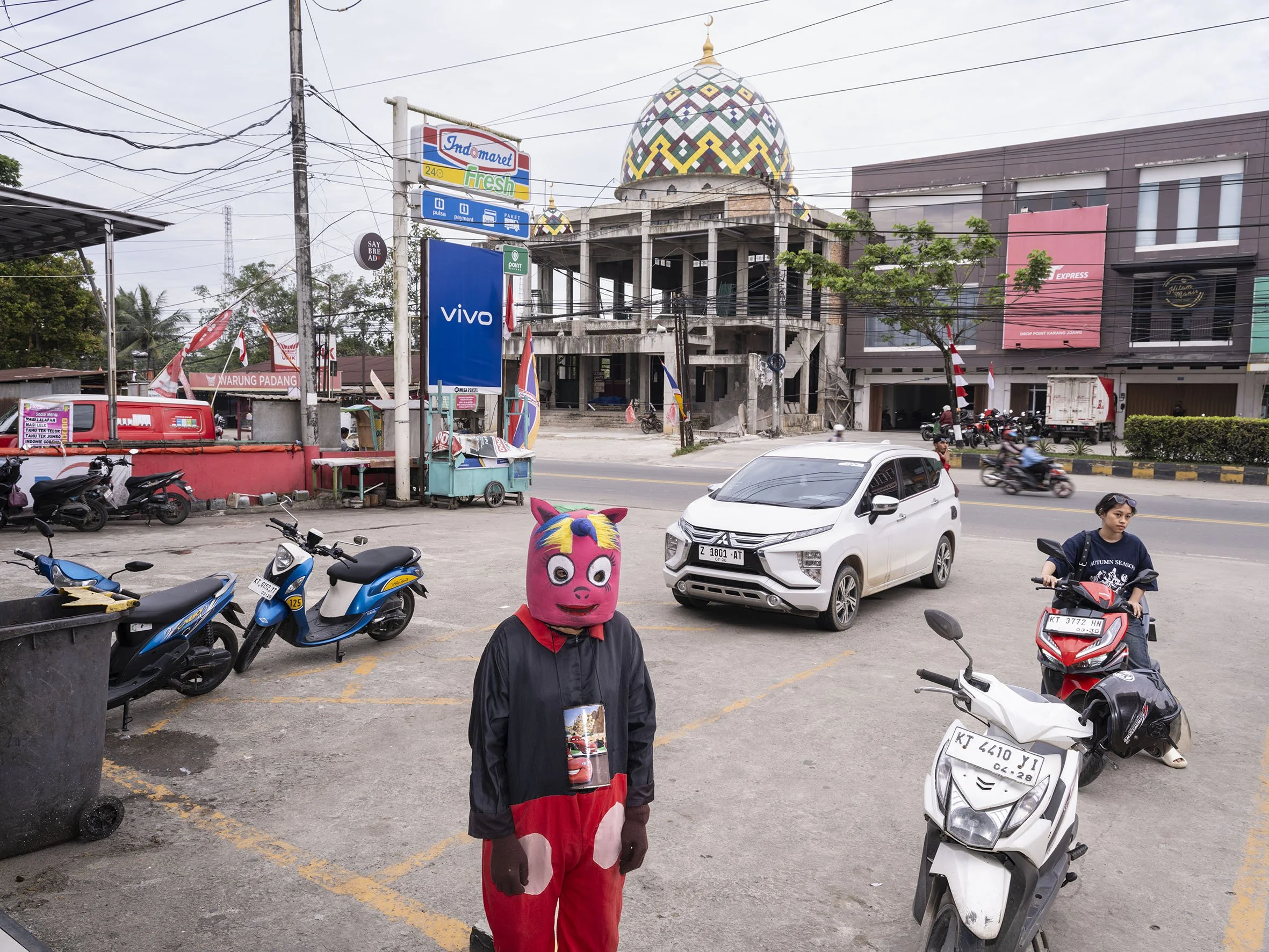
A man in disguise is begging for money in Balikpapan. August 27, 2025
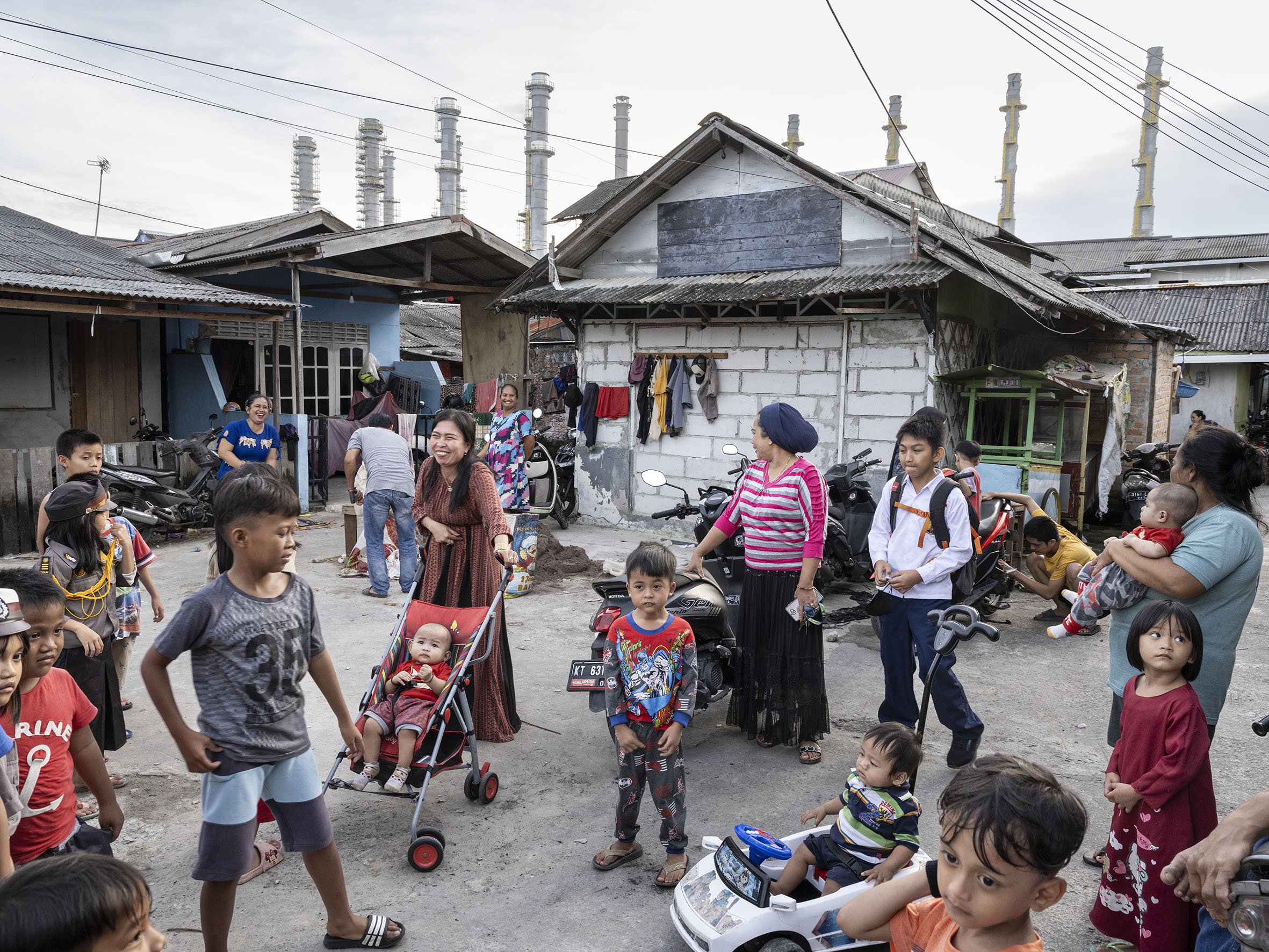
The fishing community of Kampung Baru in Balikpapan lives near the polluting refinery of state-owned oil company Pertamina, whose smokestacks can be seen in the background. September 6, 2022
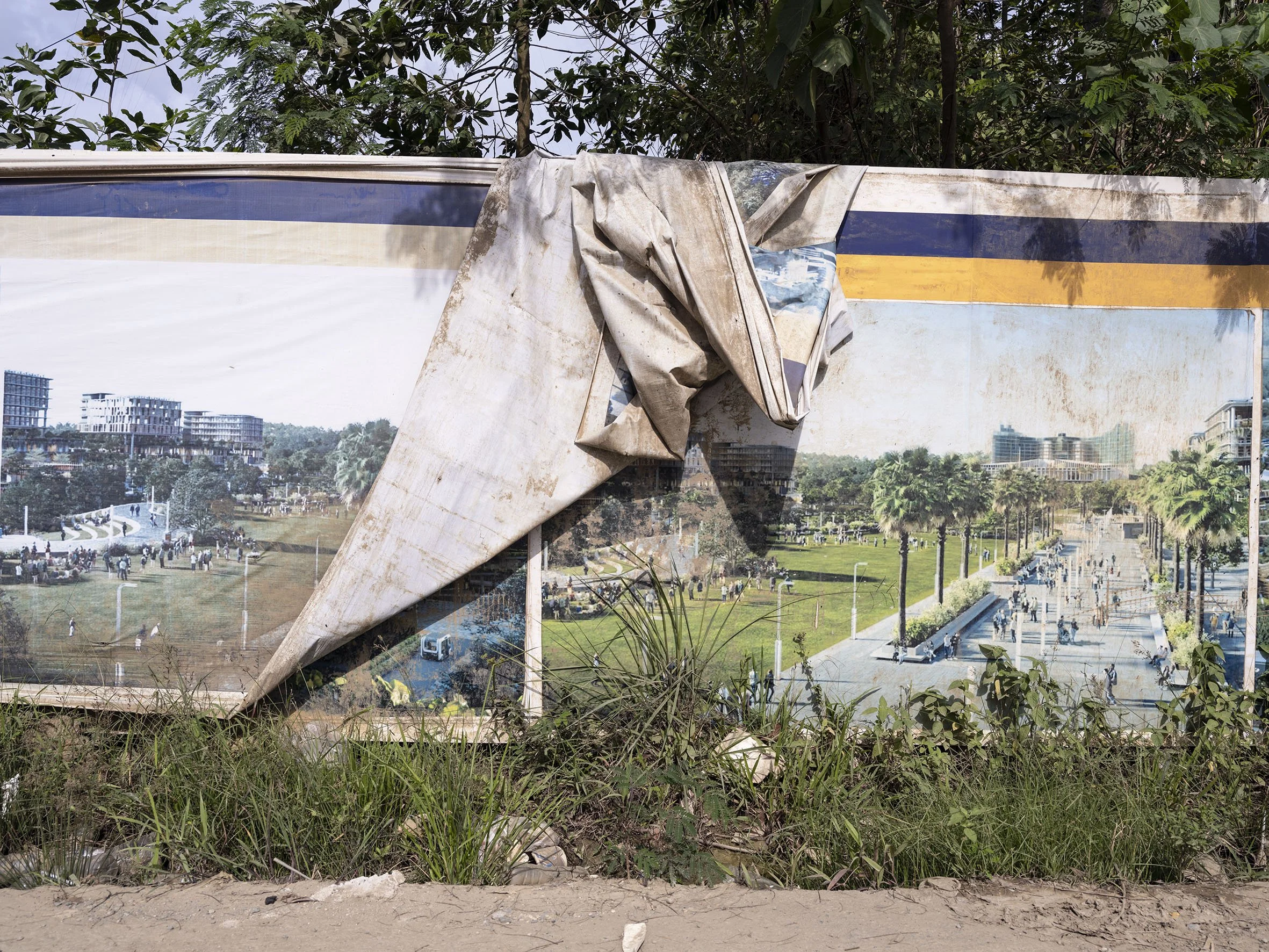
Nusantara, August 27, 2025